The Taste That Refuses to Be Polite: Anisette's Return as America's Most Defiant Sip
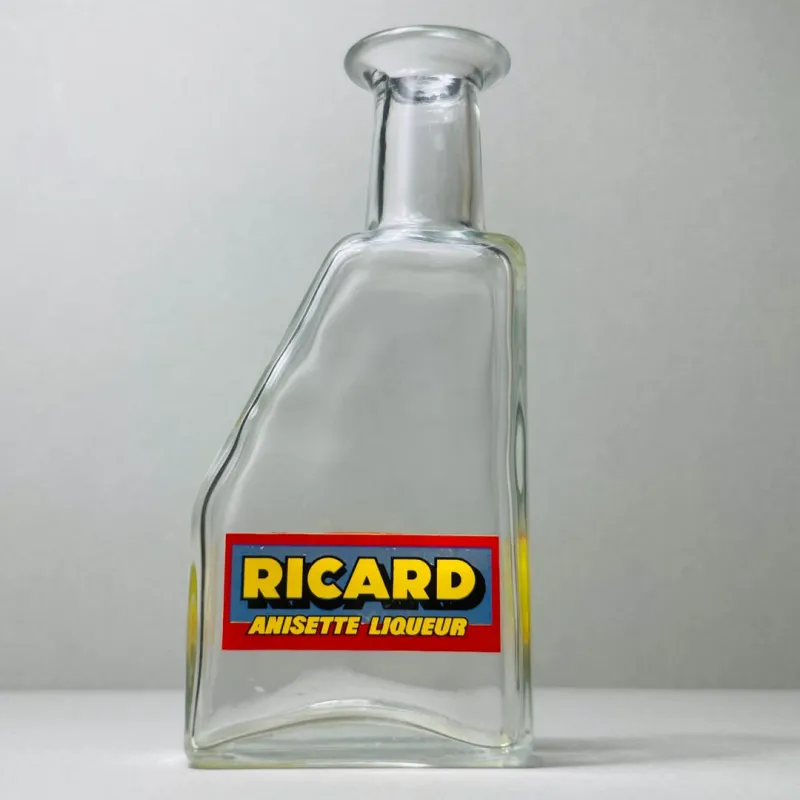
Photo: anisette liqueur glass craft cocktail bar vintage bottle, via i.etsystatic.com
For much of the past four decades, anisette occupied a peculiar cultural position in the United States: vaguely known, rarely ordered, occasionally encountered at the back of a grandparent's liquor cabinet in a bottle whose label suggested the Eisenhower administration. It was, by consensus of the cocktail establishment, a relic—too sweet for the bitter-leaning palates of craft bartenders, too herbal for the vodka-soda crowd, and carrying the faint stigma of a flavor that demanded something of its drinker. Licorice, after all, is not a flavor that asks politely to be liked. It announces itself.
That quality, long held against it, is precisely why anisette is back.
A Flavor With a History That Didn't Wait
To understand the liqueur's current moment, it helps to trace its longer arc. Anisette—a sweet, anise-flavored spirit distilled from aniseed and typically lower in alcohol than its cousins absinthe and pastis—has deep roots in Mediterranean and French culinary tradition. In the brasseries of Lyon and Marseille, a small glass of anisette after a long meal was as unremarkable as bread on the table. It was digestive, communal, and entirely without pretension.
Its journey to America followed the patterns of European immigration, arriving in port cities and settling into Italian-American and French-American communities where it remained a quietly beloved fixture well into the mid-twentieth century. Then came the great simplification of American taste—the decades during which bold, polarizing flavors were steadily sanded down in favor of the inoffensive, the broadly palatable, and the easily photographed. Anisette did not survive that era with its reputation intact.
What it survived with, it turns out, was its character. And character, in the current moment of American drinking culture, is the commodity in shortest supply.
The Instagram Problem and Its Discontents
The craft cocktail renaissance of the early 2000s was, in many respects, a genuine cultural achievement. It restored complexity, technique, and historical awareness to American bartending. But it also gave rise to a parallel aesthetic that has proven harder to shake: the supremacy of the visually compelling over the genuinely interesting. Cocktails designed to photograph well. Flavors calibrated to offend no one. Menus that gesture toward adventure while ensuring the experience remains, at its core, comfortable.
This is the dining and drinking culture that a growing cohort of American consumers—particularly those who have traveled, eaten widely, and grown impatient with the managed experience—has begun to resist. They are seeking flavors that require something of them. Ingredients with edges. Drinks that do not immediately explain themselves.
Anisette meets this moment with almost pointed relevance. It is sweet but not cloying. Herbal but not medicinal. It carries the memory of a specific place and tradition without being precious about it. And it divides opinion in exactly the way that interesting things tend to divide opinion—not because it is trying to be provocative, but because it is being entirely, unapologetically itself.
How Bartenders Are Using It Now
The contemporary applications of anisette in American craft cocktail programs reveal a sophisticated understanding of how the liqueur functions in balance. It is rarely the lead voice—more often the element that lifts a drink into unexpected territory. A measure of anisette in a classic Negroni variation introduces a herbal sweetness that reframes the bitterness of Campari. Added to a citrus-forward gin cocktail, it creates the kind of aromatic complexity that lingers after the glass is empty.
Chefs, too, have rediscovered its culinary utility. In French brasserie cooking, anise in various forms has always been a quiet presence—in braises, in seafood preparations, in the pastry kitchen. Contemporary American chefs are reconnecting with this tradition, incorporating anisette into sauces, glazes, and dessert components with a fluency that suggests genuine engagement rather than novelty-seeking.
At Anisette Brasserie, the liqueur that gives us our name is not treated as a curiosity or a marketing device. It is a lens through which we understand flavor: the willingness to commit to something specific, something that cannot be made universally appealing, something that rewards the drinker who chooses to meet it halfway.
Acquired Taste as Cultural Argument
There is a broader argument embedded in anisette's revival, and it extends well beyond the contents of a cocktail glass. The return of polarizing, assertive flavors to serious American drinking and dining represents a form of cultural maturation—a willingness to move beyond the comfort of consensus and engage with experiences that require patience, exposure, and the occasional moment of genuine discomfort.
Acquired tastes are, by definition, tastes that cannot be acquired without effort. They demand a kind of sustained attention that is increasingly rare in an era of algorithmic recommendation and instant gratification. To develop a genuine appreciation for anisette—to move from the first sip's surprise to the third glass's pleasure—is to practice a form of openness that has implications well beyond the bar.
This is what the most thoughtful corners of American dining culture are beginning to understand: that sophistication is not the elimination of challenge, but the cultivation of the capacity to meet it. Anisette, with its centuries of tradition and its refusal to make itself easy, is an excellent place to begin.
It was never supposed to survive the era of bland sophistication. It survived anyway. And in doing so, it has something worth saying about what serious American drinking—and serious American dining—might yet become.