Five Dishes, Cooked Perfectly: The French Home Cook's Quiet Argument Against Culinary Overreach
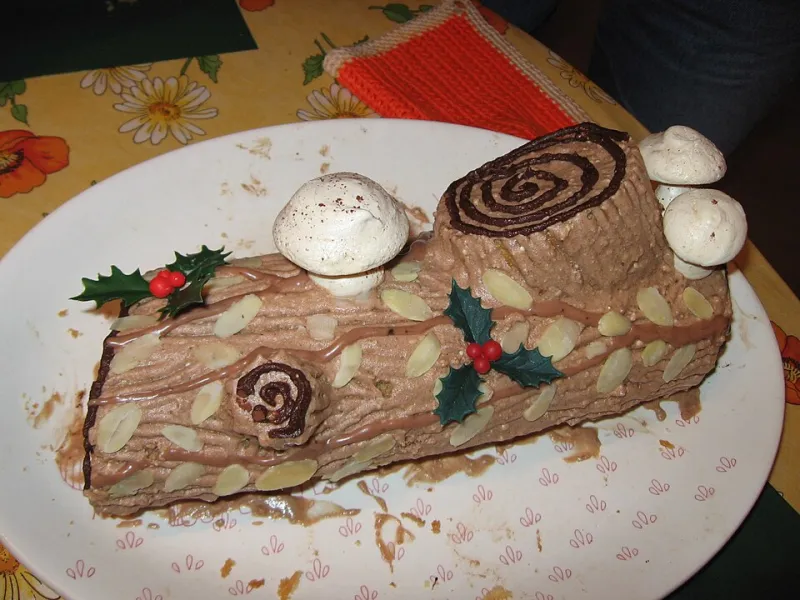
Photo: Syced, CC0, via Wikimedia Commons
Somewhere between the third failed attempt at a restaurant-quality soufflé and the discovery of yet another forty-five-step recipe on a popular food blog, many American home cooks arrive at a quiet crisis of confidence. The tools are excellent. The ingredients are accessible. The tutorials are abundant. And yet the food, too often, disappoints — not catastrophically, but in the particular way that comes from attempting too much, too quickly, with too little genuine understanding of the fundamentals beneath the technique.
The French home cook, by contrast, tends to operate from a very different set of assumptions — and the results of those assumptions are worth examining carefully.
The Repertoire as Philosophy
In France, the concept of a personal culinary répertoire carries real cultural weight. To have a répertoire is not to possess a collection of recipes, but to have internalized a set of dishes so thoroughly that their preparation requires no consultation of notes, no anxious rechecking of measurements, no uncertainty about when the heat should be adjusted. These are dishes one can cook while talking, while pouring wine, while managing the particular chaos of a full dining room in a home kitchen.
The French domestic cooking tradition has long emphasized depth over breadth. A home cook who can produce a flawless roast chicken with pan drippings, a proper vinaigrette, a well-made pot-au-feu, a reliable tarte tatin, and a simple gratin dauphinois is, in the estimation of most French culinary sensibility, better equipped for a lifetime of good eating than someone who can attempt, imperfectly, a hundred dishes drawn from a dozen different traditions.
This is not insularity. It is a form of culinary wisdom that Americans are only recently beginning to appreciate.
The Tyranny of the New
American food culture has, for at least the past two decades, been organized around novelty. Food media rewards the new recipe, the unexpected ingredient combination, the technique borrowed from a distant tradition and applied in an unfamiliar context. Home cooks who engage with this culture are implicitly encouraged to be perpetual students — always beginning, rarely mastering, forever in pursuit of the next interesting thing to attempt.
The consequences of this orientation are not difficult to identify. Confidence in the kitchen remains elusive because confidence requires repetition, and repetition is the one thing this culture consistently discourages. A cook who makes the same dish twenty times will understand it in a way that a cook who makes it once, photographs it, and moves on to something new never will.
The French approach inverts this logic entirely. Mastery is the goal, not exposure. The répertoire is built slowly, dish by dish, season by season, and it is built through the kind of deliberate, patient repetition that produces genuine knowledge rather than mere familiarity.
Learning to Say No to the Recipe
One of the most striking aspects of French home cooking, for Americans who have spent time in French households, is how rarely recipes are consulted in the conventional sense. A French home cook preparing a simple roast leg of lamb with flageolet beans is not following a recipe — they are executing a set of principles so deeply internalized that the preparation feels almost intuitive. The lamb is seasoned generously and given time. The beans are cooked with aromatics and patience. The pan is deglazed with care. Nothing about this is complicated; everything about it is considered.
The distinction matters enormously. A cook following a recipe is dependent on external authority. A cook working from internalized knowledge is autonomous. And autonomy in the kitchen produces a kind of confidence that no recipe, however well written, can confer.
This is the argument that French home cooking makes, quietly and persistently, against the recipe-driven model that dominates American culinary culture. Not that recipes are without value — they are essential for learning — but that the goal of consulting a recipe should always be to eventually not need it.
Americans Who Made the Shift
For those who have made this transition, the change is described less as a technique adjustment than as a fundamental reorientation of purpose.
Take the experience of a home cook in Minneapolis who spent years accumulating cookbooks and attempting elaborate weekend projects — hand-rolled pasta, multi-component composed salads, technically demanding braises drawn from professional restaurant menus. The results were inconsistent and the process, she admits, was rarely pleasurable. "I was always performing," she says. "For Instagram, for guests, for some imaginary version of myself who was a much better cook than I actually was."
A trip to Lyon, where she spent a week eating in the homes of local families, recalibrated her entirely. What she encountered was not elaborate. A simple salad of frisée with lardons and a poached egg. A slow-cooked chicken in wine with mushrooms. A cheese plate followed by a store-bought tart from the neighborhood boulangerie, unashamed and entirely appropriate. "Nobody was trying to impress anyone," she recalls. "The food was just good. Really, genuinely good. And it was good because they had made these things a hundred times."
She returned home and made a deliberate choice: five dishes, cooked until they were perfect. A roast chicken. A simple vinaigrette. A vegetable gratin. A braised short rib. A chocolate mousse. Six months later, she describes her relationship with cooking as entirely transformed — not because the dishes are complex, but because she now makes them with a quiet authority that no recipe could have given her.
Ingredient Quality as the Governing Principle
Underpinning the French home cooking philosophy is a commitment to ingredient quality that American cooks often underestimate. When the repertoire is small, every component carries more weight. The butter in a simple beurre blanc cannot be mediocre. The eggs in a well-made omelette must be genuinely fresh. The herbs finishing a roasted vegetable need to be added at the right moment and with the right quantity. Restraint in technique demands excellence in sourcing.
This is a principle that connects directly to the broader French relationship with food — the understanding that a superior ingredient, treated with minimal interference, will always outperform an inferior one subjected to elaborate preparation. The corollary, for American home cooks, is both liberating and clarifying: spend less time on technique and more time finding genuinely good produce, meat, and dairy. The cooking will improve as a consequence.
The Permission to Stop Trying So Hard
What the French home cooking philosophy ultimately offers is something that many American cooks desperately need: permission. Permission to stop attempting the unfamiliar. Permission to make the same dish again, and again, until it is exactly right. Permission to serve something simple to guests without apology, confident that simplicity executed with mastery is always preferable to complexity executed with uncertainty.
A perfectly roasted chicken, fragrant with thyme and resting in its own golden juices, served at a table set with care and accompanied by a glass of good wine, is not a compromise. It is, in the French estimation — and increasingly in the American one — exactly enough.