Drink to Converse, Not to Conquer: How French Aperitif Culture Is Redefining the American Bar
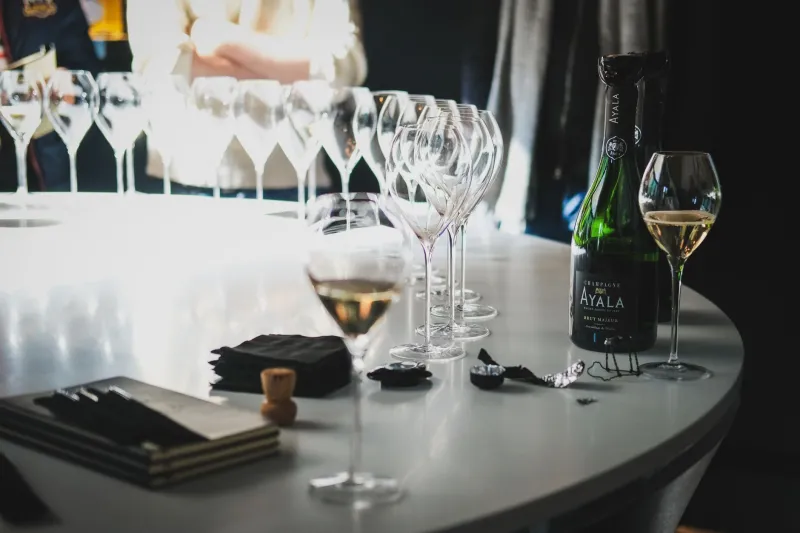
There is a particular moment in any great Parisian brasserie — just as the evening light turns amber and the marble-topped tables begin to fill — when the bartender sets down a slender glass of pale golden Kir and the room seems to exhale. No one is rushing. No one is ordering a second round before the first has been savored. The drink exists not to accelerate the night but to inaugurate it, gently and with intention.
This is the aperitif in its truest form: a ritual of anticipation rather than consumption. And while Americans have long approached the cocktail hour as a sprint toward euphoria, a quieter revolution is unfolding behind the bars of cities from New Orleans to Portland, one that is finally asking whether we might drink more intelligently — and, in doing so, enjoy ourselves far more deeply.
What the French Understood First
The word apéritif derives from the Latin aperire, meaning to open. The French took this etymology seriously. A proper aperitif is designed to stimulate the appetite without overwhelming the palate, to loosen conversation without loosening judgment, and to mark the transition between the working day and the pleasure of the table.
Classic French aperitif drinks are constructed around this philosophy. The Kir — a simple blend of dry white Burgundy and a splash of blackcurrant crème de cassis — contains perhaps eight or nine percent alcohol when mixed correctly. The Pastis, that anise-scented spirit synonymous with Provence, is traditionally diluted five parts water to one part spirit, transforming a strong liqueur into something almost meditative in its gentleness. Even the Champagne-based aperitif, whether a straightforward coupe of brut or a Kir Royale with its blush of cassis, is chosen for its effervescence and acidity, qualities that awaken the stomach rather than numb it.
"In France, the first drink is a conversation starter, not a conversation ender," says Marcus Delacroix, head bartender at a French-influenced cocktail bar in Chicago's West Loop. "Americans come in wanting something strong and immediate. We've been slowly re-educating our regulars — and honestly, once they experience that shift, they don't want to go back."
The Low-ABV Movement Finds Its French Roots
The American craft cocktail renaissance of the past two decades produced extraordinary drinks, but it also produced an arms race of complexity and alcohol content. Fourteen-ingredient cocktails with multiple spirits became a point of pride. The aperitif philosophy — restraint, elegance, purpose — was largely absent from that conversation.
Now, the pendulum is swinging. Low-ABV cocktails have moved from a niche wellness concern to a genuine bartending discipline, and the most thoughtful practitioners are drawing directly from the French playbook.
At a brasserie-inspired bar in Nashville, Tennessee, beverage director Sophie Hargrove has built an entire section of her menu around what she calls "the opening act." Her interpretation of the Kir Royale uses a local sparkling wine from the Finger Lakes, a gesture that honors the French spirit of terroir while celebrating American craft. Her Pastis Spritz — Pastis diluted with sparkling water and served over a single large ice cube with a slice of lemon — has become one of the bar's most ordered drinks.
"People are surprised by how satisfying these drinks are," Hargrove explains. "They're not watered-down. They're precisely calibrated. There's a difference."
That distinction matters enormously. A well-made low-ABV aperitif is not a compromise — it is a deliberate choice. The flavors of a quality Pastis, with its layers of star anise, fennel, and dried herbs, are complex enough to reward attention. The delicate effervescence of a properly chilled Champagne coupe is a sensory experience in its own right.
Three Recipes to Master at Home
The good news is that the aperitif tradition is among the most accessible in French culinary culture. These drinks require no elaborate technique, only quality ingredients and a willingness to slow down.
The Classic Kir Pour approximately one teaspoon of crème de cassis into a chilled white wine glass. Fill with a dry, unoaked white Burgundy or a quality Aligoté. Do not stir. The cassis will drift upward through the wine in a slow, beautiful ribbon. Serve immediately.
Pastis à la Provençale Measure one part Pastis (Henri Bardouin or Ricard are widely available in the US) into a tall glass. Add five parts cold water — never ice water, as the temperature matters less than the dilution ratio. Watch as the liquid transforms from amber to a milky, opalescent cloud. Add a single ice cube if desired. This drink is meant to be sipped over twenty minutes, not consumed in five.
Champagne Apéritif with Elderflower This is a gentle contemporary variation. Add a half-ounce of St-Germain elderflower liqueur to a chilled Champagne flute. Fill with a dry Champagne or Crémant d'Alsace. Garnish with a thin slice of cucumber. The result is floral, light, and extraordinarily convivial.
The Philosophy Behind the Pour
What French bartenders understand — and what their American counterparts are beginning to embrace — is that a drink served at the beginning of an evening carries a responsibility. It sets the emotional register for everything that follows. A drink that overwhelms the palate before dinner arrives is not hospitality; it is a missed opportunity.
"The aperitif is a gift to your guests," says Delacroix. "You're saying: the evening has begun, we are together, let us be present. That's a very French idea, but it's also just a very human one."
At Anisette Brasserie, this philosophy has always been central to the dining experience. The aperitif hour is not a prelude to be rushed through — it is the first movement of a longer composition, one that deserves the same care and attention as every course that follows.
Perhaps that is the most radical thing French aperitif culture asks of Americans: not to drink less, exactly, but to drink with more intention. To choose a glass that invites conversation rather than curtails it. To understand that the most sophisticated thing one can do at a bar is to make the first drink last — and to make it mean something.