Zinc Counters in Unexpected Places: The American Neighborhoods Quietly Mastering the Brasserie Spirit
The classic French brasserie was not born in luxury. It emerged from working-class Alsatian brewing culture, spreading through Paris as a place where ordinary people could eat well, drink honestly, and remain as long as they wished without being made to feel unwelcome. The marble tables, the mirrored walls, the long hours — these were not affectations. They were functional expressions of a democratic hospitality that asked very little of its guests beyond their presence and their appetite.
It is perhaps this democratic character that explains why the brasserie spirit, stripped of its Parisian geography, has taken root in American neighborhoods that no one predicted. Not in the expected precincts of Manhattan's Upper East Side or San Francisco's established French quarters, but in the former warehouse districts of Cincinnati, the revitalized main streets of Asheville, the quietly cosmopolitan neighborhoods of Minneapolis. The brasserie, it turns out, is a remarkably portable idea.
What Makes a Space Feel Genuinely French
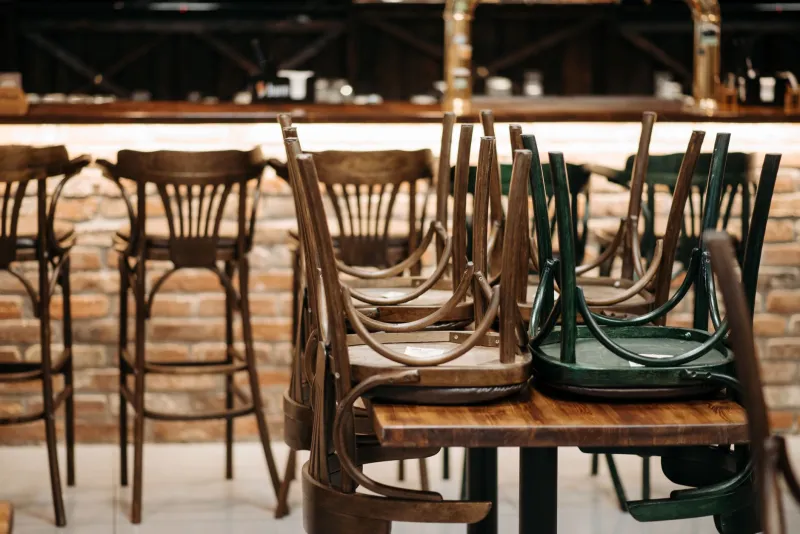
Before exploring where this spirit has traveled, it is worth asking what it actually consists of. The physical markers help — the long bar, the bentwood chairs, the handwritten daily specials, the lack of excessive ambient noise management that results in the particular conversational hum that defines a room in full life. But these are symptoms, not causes.
The cause is an attitude toward time and hospitality that runs counter to much of American restaurant culture. A brasserie does not turn tables. It does not distribute checks unprompted. It does not play music at a volume that discourages conversation. It operates on the assumption that guests have arrived not merely to eat but to be somewhere, and that being somewhere worthwhile for an extended period is itself a form of pleasure.
"People ask me what makes our place feel French, and I always say it's the same thing: we're not in a hurry, and we don't want you to be either," says Claire Fontaine, who opened her brasserie-influenced restaurant in Chattanooga, Tennessee, four years ago after spending time working in Lyon. "That's actually a radical concept in American dining. People almost don't trust it at first."
Cincinnati's OTR District: An Unlikely Arrondissement
Over-the-Rhine, Cincinnati's historic neighborhood of 19th-century Italianate architecture, has undergone a striking revitalization over the past decade. Its building stock — dense, European in scale, built by German immigrants who brought their brewing culture with them — has proven an unexpectedly natural home for French-influenced hospitality.
Among the restaurants that have emerged there, one stands out for the seriousness of its brasserie commitment. Chef Daniel Wren, a Cincinnati native who trained in Bordeaux, opened his establishment on Vine Street with the explicit intention of creating a space that could function as a neighborhood anchor — a place residents could visit on a Tuesday evening for a simple croque monsieur and a glass of Beaujolais as readily as they might come for a celebratory dinner on a Saturday.
"The brasserie was always the neighborhood's living room," Wren explains. "I wanted this to feel like that. Not a destination restaurant. A place where you belong."
The menu reflects this philosophy without apology. Steak frites with house-made béarnaise. Soupe à l'oignon prepared with a beef stock that simmers for eight hours. A rotating cheese selection sourced through an importer in Chicago. The wine list is short, honest, and priced to encourage ordering by the carafe.
Asheville, North Carolina: Mountain Air and French Sensibility
Asheville has long occupied an unusual position in the American culinary landscape — a small city with a disproportionate concentration of serious food culture, much of it oriented around local sourcing and artisanal production. These values align more naturally with French brasserie philosophy than with any other dining tradition, which may explain why the city has produced several restaurants that feel, without any particular contrivance, authentically Gallic in spirit.
Chef Margaux Thierry, who grew up in Lyon and moved to Asheville after marrying an American, operates a forty-seat restaurant in the River Arts District that she describes simply as "the place I wished existed when I arrived." The space is spare but warm — white tile, a zinc-topped bar salvaged from a French restaurant that closed in Atlanta, a chalkboard menu that changes with what the nearby farms are producing.
"In Lyon, we eat with the seasons because there is no other way to eat well," Thierry says. "Here, I found that the farmers already understood this. The philosophy was waiting. I just had to connect it to the table."
Her plat du jour has become something of a local institution. On a recent visit, it was a braised chicken thigh with celery root purée and a scattering of fresh thyme — modest in its ambitions, impeccable in its execution, and served without ceremony at a price that invited return visits.
Minneapolis: Brasserie Culture in the Midwest
Minneapolis has surprised observers before with the depth and sophistication of its food scene, and its embrace of French brasserie culture is no exception. In the Linden Hills neighborhood, a husband-and-wife team — he from rural Minnesota, she from Paris's 11th arrondissement — have created a restaurant that manages the rare achievement of feeling simultaneously very French and very Minnesotan.
The husband, Thomas Bergstrom, handles the front of house with a warmth that is entirely American in its openness while being entirely French in its patience. His wife, Isabelle, cooks with the precision and economy of someone who learned to regard waste as a moral failing. Their menu changes weekly. Their regulars know not to expect the same dish twice in a row, and have come to regard this as one of the restaurant's greatest pleasures.
"A brasserie is a relationship," Isabelle Bergstrom says. "With your guests, with your suppliers, with your neighborhood. You build it slowly. You don't build it with a marketing strategy."
The Lesson These Spaces Teach
What unites these scattered establishments — in Cincinnati, Asheville, Minneapolis, and the dozens of similar spaces emerging quietly across the country — is not a shared aesthetic or a common menu. It is a shared understanding of what a restaurant is fundamentally for.
The French brasserie, at its best, is a civic institution. It is a place that takes seriously its responsibility to provide not just nourishment but duration, comfort, and community. It asks guests to arrive without urgency and to leave without regret. It treats the act of eating together as something worthy of proper time and genuine care.
These are not specifically French virtues. They are human ones. And the fact that they are finding expression in American neighborhoods far from any obvious culinary tradition suggests something encouraging: that the appetite for this kind of hospitality was always present. It simply required, in many cases, the example of a zinc counter and a well-made croque madame to bring it to the surface.