Setting the Stage: How the Ritual of the Laid Table Is Becoming America's Quiet Act of Resistance
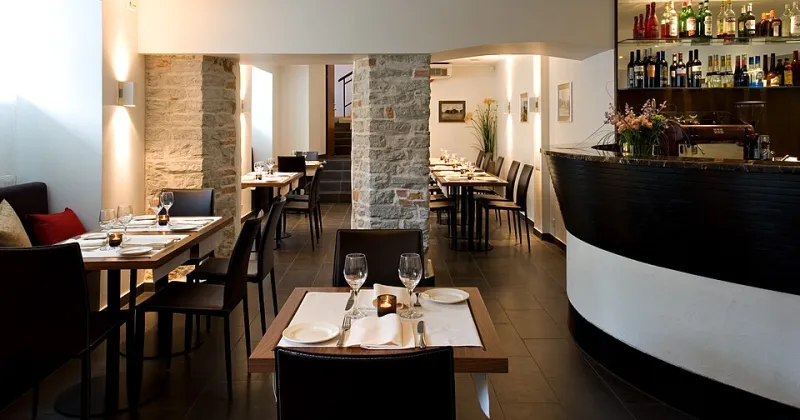
Photo: Unique Hotels, CC BY-SA 2.0, via Wikimedia Commons
There is a moment, in the best French brasseries, that occurs before a single dish arrives. The table is already speaking. White linen lies without a crease. A bread plate anchors the upper left, a water glass stands at attention above the knife, and a folded napkin waits with the quiet patience of something that knows its purpose. Nothing has been eaten. Nothing has been poured. And yet the meal has already begun.
This is the philosophy of la mise en place de table — the setting of the table — and it is a concept that Americans, for generations accustomed to paper napkins and mismatched cutlery, are beginning to take seriously. Not out of pretension, but out of something more urgent: the need to reclaim the dinner table as a place of genuine presence.
A Ceremony in Disguise
The French do not set a table merely to organize utensils. They set a table to signal intent. Each element placed upon it communicates something to the guest before the host has spoken a word. The napkin, unfolded and draped across the lap at the moment of sitting, marks the formal beginning of the meal. The arrangement of forks — salad fork to the far left, dinner fork closer to the plate — tells a story of what is to come. The positioning of glassware, descending in size from water to red wine to white, imposes a hierarchy that is both practical and ceremonial.
In France, these conventions are taught at home, reinforced in school, and observed with the same seriousness one might bring to a musical score. To deviate without reason is not merely a social error — it is a failure of hospitality. The table is an extension of the host's consideration for the guest.
In America, the tradition has been more casual, more democratic in its informality. The table has often been a place of convenience rather than ceremony. But something is shifting.
The Generation That Wants to Slow Down
Across the country, particularly among younger adults in their late twenties and thirties, there is a growing appetite — perhaps an urgency — for rituals that interrupt the pace of digital life. Cooking shows have given way to a renewed interest in how a meal is experienced, not merely what is served. And increasingly, that interest is extending to the table itself.
Search trends and social media conversations reveal a quiet surge in interest around formal table-setting. Pinterest boards dedicated to French country table settings and brasserie-style dining at home have accumulated hundreds of thousands of saves. The aesthetic is specific: linen napkins, mismatched vintage stemware, a single taper candle, bread placed directly on the tablecloth in the French tradition. It is not the maximalist tablescape of a holiday spread, but something more restrained and more intentional.
What these younger Americans seem to be reaching for is not the appearance of formality, but the feeling that formality produces. A properly set table, they are discovering, does something to the people who sit at it. It slows them down. It signals that what is about to happen matters.
The Technical Details That Transform the Experience
For those new to the French approach, the specifics are worth understanding — not as rigid rules, but as a vocabulary with real expressive power.
The napkin is perhaps the most overlooked element. In French tradition, the napkin is never tucked into the collar; it rests across the lap, and when a diner briefly leaves the table, it is placed loosely on the chair — not the table — to indicate an intention to return. This small gesture communicates awareness of one's dining companions and a respect for the shared space.
The placement of cutlery follows the logic of the meal's progression. Forks to the left, knives and spoons to the right, each arranged in the order of use from the outside in. The knife blade always faces the plate. These are not arbitrary conventions — they are a map of the meal, a quiet orientation for the guest.
Glassware hierarchy is equally purposeful. The water glass occupies the position of greatest prominence, directly above the dinner knife. Wine glasses are arranged to its right, sized and positioned according to which wine will be served first. When multiple wines are planned, this arrangement becomes a visual timeline of the evening.
The bread plate, placed to the upper left, keeps the table organized and prevents the common confusion — familiar to anyone who has dined at a round table — of whose roll belongs to whom.
Mastering these elements does not require a formal education in French etiquette. It requires only attention, and the willingness to treat the act of setting a table as something worthy of that attention.
Why Formality Is Not the Opposite of Warmth
One of the most persistent misunderstandings in American dining culture is the assumption that formality and warmth are in opposition — that a carefully set table implies stiffness, while a casual one implies welcome. The French brasserie tradition suggests otherwise.
At a well-run brasserie in Paris or Lyon, the table is impeccably set, and the atmosphere is entirely convivial. The formality of the setting does not cool the conversation; it frames it. It tells the guest that someone has thought about them before they arrived, that their presence was anticipated and prepared for. This, in the deepest sense, is what hospitality means.
When Americans set their tables with this kind of deliberateness — when they iron the linen, arrange the glasses, and fold the napkins with care — they are performing the same act of welcome. The technical details are not ends in themselves. They are the visible evidence of an invisible intention: you matter enough for me to prepare.
The Rebellion Hidden in a Folded Napkin
There is something quietly radical about setting a proper table in the current moment. In a culture that increasingly eats alone, eats in front of screens, eats standing over a kitchen counter with one hand on a phone, the act of laying a cloth, arranging cutlery, and lighting a candle is a small but meaningful declaration. It says that this meal will not be hurried. It says that the people gathered here deserve more than efficiency.
The French have understood this for centuries. The table, set with care, is a promise made before the food arrives. It is an argument, made in linen and silver, that the act of eating together is among the most civilized things human beings do — and that it deserves to look the part.
For Americans rediscovering this ritual, the revelation is not that formal table-setting is elegant. It is that it is transformative. Sit down at a table that has been thoughtfully prepared, and you will eat differently. You will speak differently. You will, in all likelihood, linger.
And in a world that rarely encourages lingering, that is no small thing.