After the Last Table Leaves: The Secret Cooking Life of French Kitchen Professionals
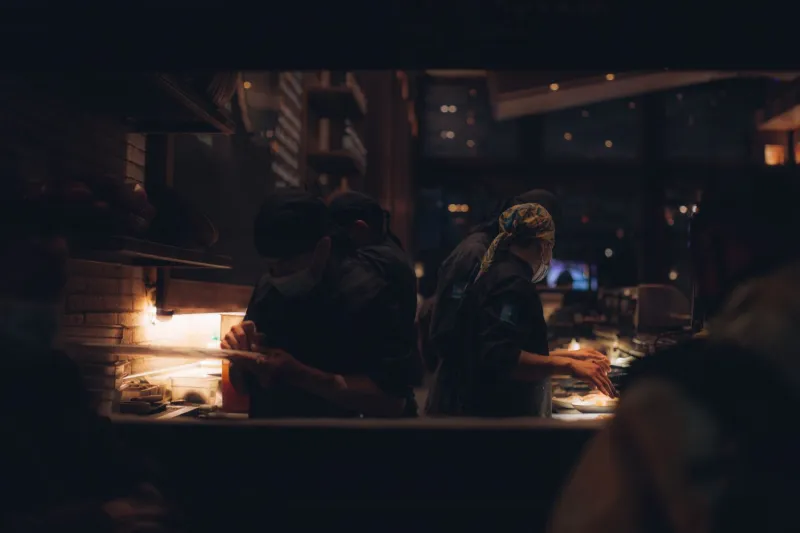
There is a version of French cooking that never appears on any menu. It has no printed description, no garnish chosen for visual symmetry, no sauce portioned to the milliliter. It happens late — sometimes very late — in the hours after the final guest has been seen to the door and the front-of-house staff have folded the last linen. In French kitchens, these are the hours that many cooks quietly consider the most honest of the entire day.
Understanding this culture requires stepping back from the polished image of French gastronomy that most Americans encounter — the starched tablecloths, the composed plates, the reverent silence of a formal dining room. The after-hours kitchen is something else entirely. It is where the craft is practiced without an audience, and where a cook's truest instincts are allowed to surface.
The Staff Meal as a Mirror of Culinary Values
In France, the repas du personnel — the staff meal — is taken seriously in a way that often surprises American culinary professionals encountering it for the first time. It is not an afterthought assembled from yesterday's trim. In a well-run French kitchen, the staff meal is a demonstration of professional pride applied to an internal audience. Cooks who would never send a sloppily plated dish to a guest bring that same standard to feeding their colleagues.
This is not merely tradition for tradition's sake. The logic is deeply practical. A cook who eats well performs well. A brigade that shares a considered meal develops cohesion. And there is something philosophically consistent about a kitchen culture that refuses to distinguish between the food that matters and the food that doesn't.
The dishes that emerge for staff meals often bear little resemblance to what the restaurant serves. A brasserie with a refined menu of duck confit and sole meunière might feed its team a pot of lentils with smoked sausage, a rough-cut salad dressed with nothing more than good mustard and vinegar, and a wedge of tart left over from the pastry station. The flavors are direct. The portions are generous. Nothing is architectural.
Experiments Without Consequence
The other thing that happens in the post-service kitchen is harder to categorize but perhaps more significant. When the pressure of a full reservation book has lifted, professional cooks begin to play. Combinations that would be too risky to test on a paying guest get explored with whatever is available — the last of a braise, a heel of cheese, a handful of herbs that didn't make it into service.
In Lyon, a city that many French food professionals regard as the true capital of serious cooking, this culture of informal experimentation has deep roots. The mères lyonnaises — the great women cooks who shaped the city's culinary identity — were not working from formal recipe collections. They were improvising within a tradition, adjusting by instinct, tasting constantly. That spirit persists in professional kitchens today, most visibly when the lights go low and the audience disappears.
Some of the most celebrated dishes in French culinary history were born in precisely this kind of moment — not in formal testing sessions but in the unguarded hours when a cook was feeding only themselves and perhaps a trusted colleague. The absence of stakes, paradoxically, produces some of the most confident cooking.
What Happens When Presentation Stops Mattering
American dining culture has developed a complicated relationship with the visual dimension of food. Social media has amplified this to an almost exhausting degree — a dish's photographic qualities have become, for many diners, as relevant as its flavor. French professional kitchens, particularly after hours, represent a meaningful corrective to this tendency.
When a cook plates something only for themselves, the bowl or plate they choose is whatever is closest. The sauce gets poured without ceremony. If the food is good, it is eaten with full attention and genuine pleasure. If it isn't quite right, the lesson is absorbed without the anxiety of a guest's reaction.
This is not anti-aesthetics. French cooks care deeply about beauty at the table. But the after-hours kitchen teaches something important: that beauty in food is a consequence of good technique and honest ingredients, not a goal pursued independently of flavor. When presentation is removed from the equation, the fundamentals have nowhere to hide.
Bringing This Philosophy to the American Home Kitchen
For the home cook, the lessons of the after-hours French kitchen are more accessible than they might appear. The first and most important is permission — permission to cook for yourself with the same care you would bring to cooking for guests. The weeknight dinner eaten alone deserves a properly made vinaigrette. The leftover roast chicken deserves to be warmed with a little stock and finished with a knob of butter rather than eaten cold over the sink.
The second lesson is the value of cooking without a net. Choose an ingredient that's available, apply heat, taste, adjust. The French professional cook working at midnight is not consulting a recipe. They are drawing on accumulated knowledge and trusting their senses. This is a skill that develops only through practice — specifically, through the kind of low-stakes practice that the after-hours kitchen makes possible.
At Anisette Brasserie, this spirit informs how we think about food at every level. The dishes we serve to our guests carry the same commitment we bring to everything made within these walls — including what the kitchen team eats before the evening begins. Authentic French cooking culture does not draw a line between food that matters and food that doesn't. That refusal to make that distinction is, ultimately, what makes it great.
The Intimacy of a Kitchen After Midnight
There is one final quality of the after-hours French kitchen worth naming: its intimacy. The brigade that has worked through a demanding service shares something that is difficult to articulate but unmistakable in the room. The cooking that happens in that moment is communal in a way that service cooking rarely is. Plates are passed across the pass without ceremony. Opinions are offered freely. Laughter is more common than silence.
This is the French kitchen at its most human — not the idealized image of precision and classical technique, but something warmer and more sustainable. It is a reminder that at the center of all the philosophy and craft and tradition, cooking is fundamentally an act of generosity. Even when the only people in the room are the cooks themselves.