Clocks, Courses, and the Cost of Hurrying: Why American Bistros Miss the Point of French Dining
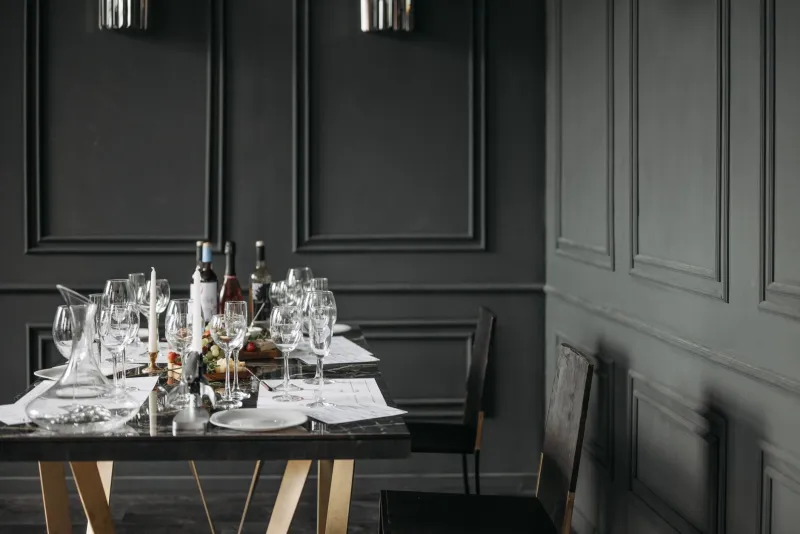
There is a particular irony embedded in the American love affair with French dining. Walk into nearly any upscale bistro from Manhattan to Seattle and you will find the telltale markers of Parisian influence: zinc-topped bars, handwritten chalkboard menus, steak frites plated with studied nonchalance, and a wine list that leans heavily toward Burgundy and Bordeaux. The vocabulary is fluent. The aesthetic is convincing. And yet, something remains fundamentally absent — something that no amount of imported Dijon mustard or reclaimed wood paneling can manufacture.
That missing element is time. Specifically, the willingness to spend it.
The Menu Is the Easy Part
Replicating a French menu is, in the grand scheme of culinary ambition, a relatively straightforward exercise. Recipes travel well. Techniques can be taught, practiced, and refined. A skilled American chef can produce a cassoulet or a sole meunière that would earn genuine respect in Lyon. The food, increasingly, is not the problem.
What American restaurants struggle to import is the underlying philosophy that gives those dishes their full meaning — the understanding that a meal is not a transaction but a ceremony. In France, the structure of dinner is not merely sequential; it is intentional. Each course is granted the space to be experienced, absorbed, and discussed before the next arrives. The table is held for the duration of the evening, not reclaimed the moment the last fork is set down.
This is not nostalgia for a vanishing Europe. It is a living practice observed in brasseries across Paris every evening of the week.
The Economics of the Turn
To understand why American restaurants struggle with pacing, one must first acknowledge the economic reality that shapes them. In the United States, the concept of "table turns" — the number of times a given table can be occupied and vacated in a single service — is not merely a metric. It is a survival strategy. Labor costs, rent, and thin margins conspire to make the leisurely dinner a financial liability rather than an asset.
A restaurant that seats forty guests and turns each table twice in an evening is, in blunt terms, a different business than one that seats the same forty guests and allows them to linger for three hours over four courses. The former is sustainable under American market conditions. The latter requires either a pricing model that most American diners find difficult to accept or a level of reservation demand that only a handful of restaurants in any given city can sustain.
The result is a structural tension that no amount of cultural goodwill can fully resolve. Servers, however gracious, are often implicitly — and sometimes explicitly — incentivized to move the meal along. The check arrives before it is requested. The dessert menu is presented with a subtle urgency. The second bottle of wine is poured with an efficiency that borders on the anxious.
The Diner's Complicity
It would be convenient to lay the blame entirely at the feet of restaurateurs, but American diners are equally implicated in this dynamic. The cultural expectation of efficiency runs deep. Americans are accustomed to dining with a destination in mind — a show to catch, a babysitter's curfew to honor, a general sense that lingering too long is an imposition on both the restaurant and the evening's schedule.
This orientation toward productivity extends even to leisure. The American dinner out is frequently a prelude to something else, a chapter in a longer evening rather than the evening itself. The French, by contrast, tend to treat dinner as the main event — the axis around which the rest of the night, if there is a rest of the night, quietly orbits.
This is not a moral failing. It is a cultural inheritance, shaped by decades of fast-casual dining, drive-through convenience, and a national mythology that equates speed with virtue. But it is worth naming plainly, because it is the reason that even the most beautifully conceived French-inspired restaurant in America will feel, in some fundamental way, like a costume rather than a second skin.
What a Proper Pace Actually Feels Like
For those who have dined in France — or who have experienced the rare American table that manages to get it right — the difference is visceral. There is a quality of ease that settles over a meal when no one is in a hurry. Conversation deepens. The food tastes differently when it is not consumed against the quiet pressure of an imminent check. Wine opens up over the course of an unhurried hour in ways that it simply cannot when the glass is refilled with professional haste.
At Anisette Brasserie, we have long believed that the rhythm of a meal is as important as its ingredients. The apéritif that arrives without urgency. The pause between the entrée and the main course that allows the palate to reset and the conversation to breathe. The cheese course presented not as an afterthought but as a distinct act in the evening's progression.
This is not theater. It is the natural tempo of a meal designed to be savored rather than consumed.
A Modest Proposal for the American Table
The solution is neither simple nor swift, but it begins with a willingness to reframe what a successful dinner looks like. For restaurateurs, it may mean pricing menus to support longer seatings, training front-of-house staff to read the table rather than the clock, and resisting the compulsion to fill every silence with activity.
For diners, it requires something equally challenging: permission. Permission to arrive without a plan for afterward. Permission to order the cheese course even when it adds forty minutes to the evening. Permission to allow the meal to unfold at its own pace rather than the pace the schedule demands.
French dining is not, at its core, about the food. It is about the decision to make time for what the food represents — pleasure, company, and the quietly radical act of being fully present at the table. American bistros can copy the menu. Mastering that requires something the kitchen cannot produce.