The Third Place Awakening: How Americans Are Finally Learning to Sit, Sip, and Stay
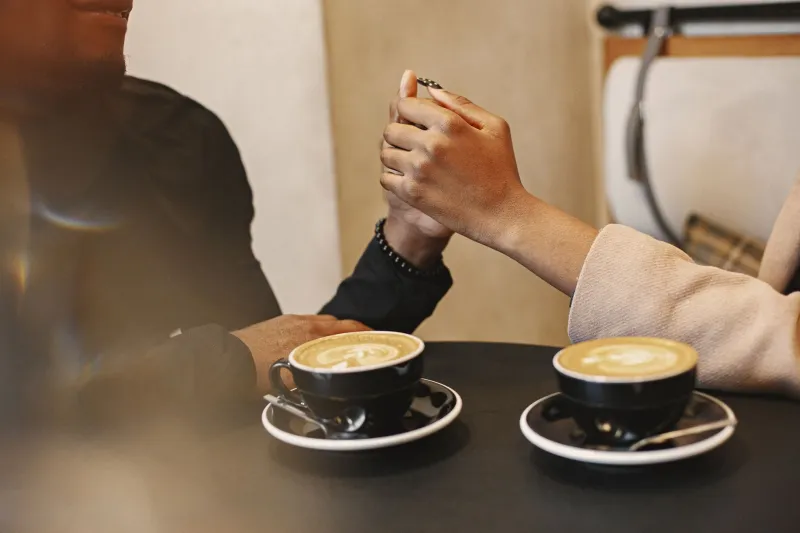
There is a particular kind of afternoon in Paris that requires no special occasion. A small marble-topped table. A single espresso, barely two ounces in its white ceramic cup. A newspaper, perhaps, or a friend across from you with nowhere pressing to be. The waiter does not hover. The bill does not arrive uninvited. Time, for a stretch of it, simply ceases to press.
For most of the twentieth century, this scene belonged exclusively to Europe — a charming cultural artifact that Americans admired on vacation and promptly forgot upon returning to their twelve-ounce drip coffees and laptop-cluttered co-working lounges. Yet something has shifted. Gradually, then all at once, a growing number of American café and casual dining spaces have begun to embrace the foundational premise of the Parisian café: that a place of refreshment ought also to be a place of genuine human presence.
What the Parisian Café Actually Represents
To understand what American dining culture is only now beginning to absorb, it is worth clarifying what the French café has always meant to those who inhabit it. The café, in its truest Parisian form, is not primarily a coffee delivery mechanism. It is what sociologists have long called a "third place" — a space that is neither home nor workplace, but something altogether more democratic and restorative.
At a brasserie or café along the Boulevard Saint-Germain, a patron might occupy a single chair for two hours with nothing more than a café crème and a copy of Le Monde. No one will suggest, however subtly, that the table is needed elsewhere. The economics of the transaction are understood differently: the customer is not merely purchasing a beverage, but renting, at a reasonable rate, a portion of civic life. The espresso is the entry ticket; the experience is the product.
This philosophy extends to conversation, too. The Parisian café has historically been where ideas were exchanged, arguments refined, and friendships deepened — not in spite of the unhurried atmosphere, but because of it. Simone de Beauvoir wrote at Café de Flore. Hemingway nursed his coffee and his prose at Les Deux Magots. The beverage was incidental. The culture was everything.
The American Café, Reconsidered
For much of its modern history, the American coffee shop has operated on an opposing set of assumptions. Speed and throughput have been the governing values. Drive-throughs, mobile ordering, paper cups engineered for motion — the entire infrastructure of American café culture has been designed around the premise that sitting still is a luxury few can afford.
This is not without reason. American work culture, with its glorification of productivity and its suspicion of leisure, has long made lingering feel indulgent, even irresponsible. To sit at a café table for an hour without a laptop open or a meeting to justify the time has carried a faint whiff of idleness that most Americans were not comfortable wearing.
And yet the pandemic years, for all their devastation, forced a reckoning. When the ability to gather was abruptly removed, Americans discovered, perhaps for the first time collectively, how much they had been missing. The café — the real one, the kind you could sit in — was not simply a place to get coffee. It was a place to be a person among other persons.
A Quiet Revolution in American Gathering Spaces
What has emerged in the years since is something genuinely encouraging. Across American cities — from the independent neighborhoods of Portland and New Orleans to the revitalized downtown corridors of Nashville and Philadelphia — a new generation of café and casual dining spaces has begun to take its cues from the European model.
These are establishments that invest in comfortable seating designed for duration rather than deterrence. They stock physical newspapers and literary journals. They train their staff to read the room — to understand when a patron wishes to be left entirely alone, and when a brief, warm exchange would be welcome. They do not play music at volumes that preclude conversation. They do not flash the WiFi password on the wall alongside a two-hour time limit.
More pointedly, they have begun to understand that the customer who lingers is not a problem to be managed but an asset to be cultivated. A person who spends ninety minutes at a corner table, orders an espresso and later a glass of still water, and returns every Tuesday afternoon because the space makes them feel human — that patron is worth more to a community-rooted establishment than a dozen grab-and-go transactions.
The Brasserie Sensibility and What It Teaches
At Anisette Brasserie, we have long held that the table is not merely a surface on which food is placed. It is the stage upon which a meal — and by extension, a life — is conducted. The French brasserie tradition from which we draw our identity has always understood that hospitality is not a service transaction but a social contract. You are welcomed not as a customer to be processed, but as a guest to be received.
This sensibility, which has governed French café and brasserie culture for centuries, is precisely what the American dining public is beginning to rediscover. The espresso does not need to be consumed in transit. The afternoon does not need to be accounted for in fifteen-minute increments. The conversation across the table does not need to yield to a notification on a screen.
When Americans sit down and allow themselves to simply be in a space — to let the coffee cool slightly before drinking it, to finish a sentence before glancing at a phone — they are not being unproductive. They are participating in something the French have always understood: that the quality of one's presence at a table is a direct reflection of the quality of one's life beyond it.
Lingering as a Form of Civic Participation
There is also a broader social argument to be made. The decline of genuine third places in American life — the erosion of the neighborhood café, the corner tavern, the public library reading room — has corresponded, not coincidentally, with a deepening sense of social fragmentation. When people have nowhere to gather without agenda, they gather less. And when they gather less, communities thin.
The French café has survived, and in many respects thrived, precisely because it refuses to be rationalized away. It remains stubbornly, beautifully inefficient by the standards of modern commerce — and that inefficiency is its greatest gift to the people who inhabit it.
Americans are beginning to understand this. The evidence is visible in the care being taken by a new generation of café owners and restaurateurs who are designing spaces not for maximum throughput, but for maximum humanity. It is a quiet revolution, conducted over small cups and unhurried afternoons.
And it is, at last, the right one.