Before the First Course: How the French Apéritif Hour Is Quietly Civilizing the American Dinner
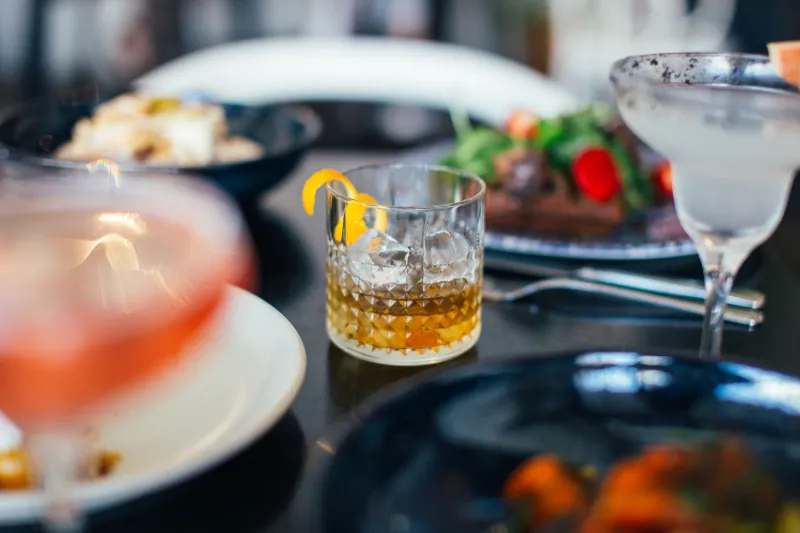
There is a particular kind of grace that settles over a Parisian café around six o'clock in the evening. Chairs are angled toward the street. Glasses catch the amber light. Conversation flows without urgency. No one has ordered dinner yet, and no one is in any hurry to do so. This is the apéritif hour — and for generations of French men and women, it has served as the essential threshold between the workday and the evening meal.
For much of American dining history, this threshold has gone largely unobserved. The prevailing approach has been efficient: arrive at the restaurant, be seated promptly, order quickly, and proceed through the meal at a pace that would leave a Parisian waiter quietly appalled. Yet something is shifting. Across the country, at home dinner parties and in thoughtfully conceived restaurants alike, the apéritif hour is finding a new and enthusiastic audience.
What the Apéritif Hour Actually Is — and Is Not
It is worth being precise about what this tradition entails, because the word apéritif is often misunderstood as simply meaning a pre-dinner drink. In the French context, it is considerably more than that. The apéritif hour — l'heure de l'apéro, as it is colloquially known — is a structured interlude of thirty minutes to an hour designed to ease the transition into a meal. It involves a measured drink, perhaps a small bite, and above all, a conscious decision to decelerate.
The drinks themselves are chosen with intention. They are not meant to be filling, intoxicating, or overpowering. Rather, they are selected to stimulate the appetite — the word apéritif derives from the Latin aperire, meaning to open — and to prepare the palate for what is to come. This distinction matters enormously when choosing what to serve or order.
The Drinks Worth Knowing
While a well-chosen glass of white wine or Champagne has long served as an acceptable apéritif in American settings, the French tradition offers a far richer vocabulary of options.
Pastis is perhaps the most culturally specific choice, deeply associated with the south of France and the spirit of Provence. Anise-forward and aromatic, it is diluted with cold water at the table — a small ritual in itself — and transforms from amber to a cloudy, opalescent pale gold. At Anisette Brasserie, the spirit of pastis is woven into our very identity, and for good reason: few drinks so effectively signal that the evening has officially begun.
Kir offers an entirely different register — lighter, more delicate, and approachable for guests who prefer something fruit-forward. Made with a measure of crème de cassis topped with crisp white Burgundy, it carries a gentle sweetness that never overwhelms. Its more celebratory cousin, the Kir Royale, substitutes Champagne for still wine and transforms the ritual into something festive without becoming excessive.
Vermouth — dry, blanc, or rouge — has undergone a remarkable rehabilitation in recent years, both in France and in the United States. Served simply over ice with a twist of citrus or an olive, a quality vermouth requires no embellishment. American bartenders and sommeliers have done much to restore this aperitif wine to its rightful prominence, and it rewards those willing to explore beyond the familiar.
For those drawn to something slightly more complex, Lillet Blanc and Dubonnet represent the broader category of vins de liqueur that have anchored the French apéritif tradition for well over a century. Both are accessible, low in alcohol relative to spirits, and pair beautifully with the small accompaniments that typically accompany the ritual.
The Small Bites That Complete the Picture
The apéritif hour is not a meal, and the accompanying food should reflect that principle. The French approach favors restraint: a handful of salted almonds, a few slices of saucisson, a small dish of olives, perhaps a gougère or two fresh from the oven. The purpose is to provide something for the hands and the palate without diminishing the appetite that the evening's meal depends upon.
This philosophy of deliberate moderation runs counter to the American instinct toward generosity, where a pre-dinner spread can easily become an unintended first course. The discipline of the apéritif hour lies precisely in its limits — and in the understanding that anticipation is itself a form of pleasure.
Bringing the Ritual Home
For those who wish to establish the apéritif hour as a domestic practice, the requirements are genuinely modest. A dedicated thirty minutes before dinner is observed, during which the table is not yet set and the kitchen is, ideally, quiet. Guests are received in the living room or on the porch. A single drink is offered — not a full bar menu — and a small plate of something simple is passed around.
The conversation during this period carries its own particular quality. Freed from the formality of the dinner table and the performance of the meal itself, people tend to speak more openly, more playfully. The evening finds its footing before it has truly begun.
For those who prefer to seek out this experience in a restaurant setting, the key is to look for establishments that honor the pace implicit in the tradition. A brasserie that encourages guests to linger over their first glass before presenting menus — rather than rushing toward the order — understands something essential about hospitality. It understands that the meal is not merely what is eaten, but everything that surrounds it.
Why This Matters Now
The appeal of the apéritif hour in contemporary American life is not difficult to understand. In a culture defined by speed and efficiency, the act of deliberately inserting a pause — of declaring that the evening will not begin in haste — carries a quiet radicalism. It is an assertion that time spent in good company, with a well-made drink and no particular agenda, is not wasted time. It is, in fact, among the most valuable time an evening can hold.
The French have always understood this. The growing number of Americans who are beginning to understand it as well suggests that the civilization of the dinner table, one apéritif at a time, is already well underway.