Terroir, Instinct, and the Table: How French Wine Pairing Philosophy Is Changing the Way Americans Drink
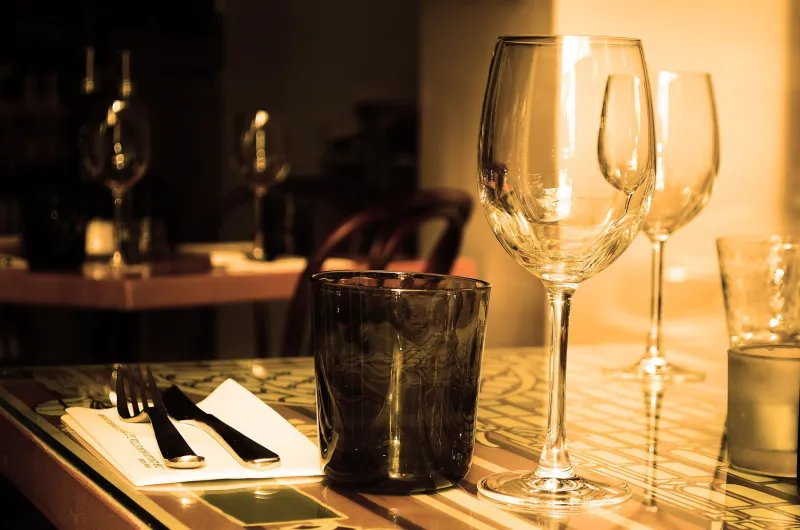
There is a particular kind of confidence one notices in a Parisian dining room. A sommelier approaches without a laminated chart. A waiter recommends a glass of Burgundy with the duck confit not because a textbook dictates it, but because the two have always belonged together — born from the same soil, shaped by the same culinary tradition. This is not arrogance. It is intimacy.
For much of the past half-century, American wine culture has been organized around a different kind of certainty — the rulebook. Red wine accompanies red meat. White wine follows fish. Rosé belongs to summer patios. These guidelines served a purpose in a country still learning to take wine seriously. But as American palates have grown more sophisticated, and as French dining culture has continued to permeate restaurants from New York to Los Angeles, a more nuanced philosophy is beginning to take hold.
The Problem With Rules
Rules, by their nature, simplify. They offer comfort to the uninitiated and a framework where none previously existed. But when it comes to wine pairing, rigid formulas often obscure the very quality they claim to illuminate: pleasure.
Consider the classic French dish sole meunière — a delicate fillet of sole finished in brown butter with lemon and parsley. The conventional American advice would steer most diners toward a crisp Sauvignon Blanc. Clean, acidic, inoffensive. And yet, in the Loire Valley, where this preparation has been refined across generations, a glass of Muscadet — mineral-driven, lightly saline, with just enough texture to mirror the butter — transforms the dish entirely. The pairing is not intuitive to someone working from a rulebook. It is intuitive only to someone who understands where both the wine and the dish come from.
This is the essence of the French approach: context before category.
What Terroir Actually Means at the Table
The word terroir is used so frequently in American wine conversations that it has begun to lose its meaning. In its truest sense, terroir refers to the complete natural environment in which a wine is produced — the soil composition, the slope of the land, the microclimate, the drainage, even the proximity to a river. But terroir is not merely a viticultural concept. It is a cultural one.
French wine regions did not develop in isolation from their cuisines. Burgundy's Pinot Noir grew alongside the region's tradition of slow-braised meats and rich cream sauces. Alsace's aromatic whites — Riesling, Gewürztraminer, Pinot Gris — evolved in a culinary landscape defined by choucroute, pork preparations, and the gentle heat of caraway and juniper. Bordeaux's structured Cabernets matured alongside the great roasted cuts and aged cheeses of the southwest.
When a French sommelier reaches for a regional pairing, they are not consulting a matrix. They are drawing on a centuries-old conversation between the land and the table. The practical takeaway for American diners is straightforward, if initially counterintuitive: when cooking a French regional dish, look first to the wines of that same region.
A Practical Framework for the American Home Cook
Adopting this philosophy at home does not require an encyclopedic knowledge of French appellations. It requires a shift in how one asks the question.
Rather than beginning with "What wine goes with chicken?" — a question so broad as to be nearly useless — consider instead: "What am I doing to this chicken, and where does that preparation come from?"
A roast chicken rubbed with herbes de Provence and served with flageolet beans calls for something entirely different than a chicken braised in Riesling with mushrooms and crème fraîche. The former, with its sun-dried herbs and Mediterranean spirit, welcomes a Côtes du Rhône — earthy, peppery, unpretentious. The latter, a preparation native to Alsace, is almost inseparable from the same Riesling used in its making: off-dry, aromatic, with an acidity that cuts cleanly through the cream.
This approach — matching the wine to the preparation rather than the protein — is one of the foundational habits of French wine culture, and it is one that translates seamlessly to the American kitchen.
The Bistro Model and Its American Reinvention
In Paris, the neighborhood bistro has long served as the informal academy of wine pairing. Menus are short, seasonal, and deeply regional. Wine lists mirror that regionality without apology. A bistro in the Marais serving cassoulet is not going to offer you a New Zealand Sauvignon Blanc. It will offer you a Languedoc red — robust, slightly rustic, and absolutely correct.
Across the United States, a growing number of French-inspired restaurants are beginning to embrace this same editorial discipline. Sommeliers are curating lists that reflect the regional logic of their menus rather than the commercial logic of popular varietals. Diners, for their part, are proving more receptive than the industry might have anticipated. The appetite for authenticity — for a dining experience that feels coherent rather than assembled — is substantial.
At the home table, this bistro model offers a useful template. A shorter, more deliberate wine selection aligned with the spirit of what is being cooked will nearly always outperform a broad, eclectic cellar chosen without reference to the menu.
Learning to Trust the Region
One of the most liberating aspects of the French approach is its implicit permission to trust geography over reputation. A modest Côtes du Rhône Villages from a lesser-known producer will, in the right context, outperform a celebrated Napa Cabernet that has no cultural relationship to the dish it accompanies. This is not a slight to California wine — it is simply an acknowledgment that coherence at the table is its own form of luxury.
For American diners accustomed to reaching for recognizable labels, this represents a genuine reorientation. It asks for curiosity over comfort, and for a willingness to let the meal, rather than the brand, guide the selection.
The French have understood this for a very long time. They have simply been too polite — or perhaps too confident — to make a great deal of noise about it.
A Final Thought
Wine pairing, at its most refined, is not a science to be mastered but a conversation to be continued. The French approach does not promise perfection. It promises engagement — with the food, with the region, with the season, and with the people seated across the table.
As American dining culture continues to absorb and reimagine French traditions, this philosophy offers something more valuable than a set of rules. It offers a way of thinking about the table that is, at its core, both more humble and more ambitious than anything a rulebook can provide.