From Forgotten Spirit to French Icon: The Timeless Allure of Anisette at the Table
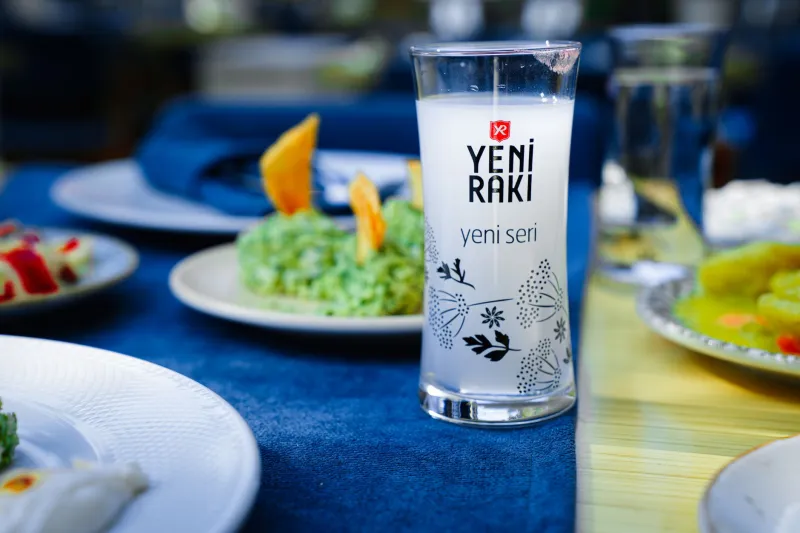
There is a particular moment in any memorable French meal — after the last course has been cleared, when conversation slows to something warmer and more deliberate — when a small glass appears unbidden. It is pale, almost luminous, faintly sweet, and carries the unmistakable breath of star anise and licorice root. It is anisette, and for generations of Parisian diners, its arrival has signaled something more than the end of a meal. It has signaled the beginning of a conversation worth having.
Yet for much of the past half century, this elegant liqueur has occupied an awkward place in the American imagination — too unfamiliar to order with confidence, too historically significant to dismiss. That is quietly changing. Across the United States, a new generation of restaurateurs, sommeliers, and home entertainers is rediscovering anisette not as a curiosity but as a cornerstone of sophisticated hospitality. At Anisette Brasserie, it is not merely a name above the door. It is a philosophy.
A Spirit Rooted in Centuries of French Tradition
Anisette's origins trace back to the distilleries and apothecaries of medieval France, where anise — prized for its digestive properties and aromatic intensity — was macerated with alcohol and sweetened to create a restorative tonic. By the eighteenth century, it had migrated from the pharmacy to the parlor, and by the height of the Belle Époque, it had become a fixture of Parisian café and brasserie culture.
Marie Brizard, the Bordeaux-born entrepreneur who commercialized the liqueur in the 1750s, is often credited with transforming anisette from a homespun remedy into a refined spirit worthy of the bourgeois table. Her formula — built on a base of anise seed, star anise, and a proprietary blend of botanicals — set the template for the style that endures today. The liqueur's reputation grew alongside the grand brasseries of Paris: those sprawling, mirrored institutions where zinc-topped bars gleamed and waiters in long aprons moved with practiced authority through clouds of cigarette smoke and convivial noise.
In that context, anisette occupied a dual role. Served before the meal, diluted with cold water and ice, it functioned as an aperitif — stimulating the appetite and signaling the formal opening of the dining ritual. Served after, in a small cordial glass and taken neat, it became the digestif — a botanical punctuation mark at the close of a long and pleasurable evening.
The Botanical Complexity Behind the Glass
To understand anisette's enduring appeal, one must first understand what distinguishes it from its more assertive relatives. Pastis, absinthe, and ouzo all share the anise family's characteristic flavor profile, but they differ meaningfully in character and application. Anisette is gentler, sweeter, and more accommodating — a spirit designed for conversation rather than confrontation.
The liqueur is typically produced by macerating anise seeds and star anise in a neutral grain spirit, then blending in additional botanicals that vary by producer. Common secondary notes include fennel, coriander, and occasionally citrus peel, each contributing to a layered aromatic experience that rewards slow, attentive sipping. The sweetness — more pronounced than in pastis — softens the spirit's edges without obscuring its character, making it accessible even to palates unaccustomed to anise-forward flavors.
When diluted with water, anisette undergoes what the French call the louche effect: a beautiful, opalescent cloudiness that transforms the liquid from clear to milky white as the essential oils released by the botanicals become suspended. It is a small spectacle, and one that never fails to draw attention at a well-set table.
Why American Dining Rooms Are Ready for Anisette
The American appetite for complexity has grown considerably in recent years. Bitter aperitivos, amari, and herbal digestifs — once confined to Italian-American neighborhoods or the menus of adventurous cocktail bars — now appear on tables from Nashville to Portland. The cultural infrastructure for appreciating an unfamiliar, botanically driven spirit has never been stronger.
Anisette fits naturally into this moment. Its sweetness makes it more immediately approachable than a bitter amaro; its herbal depth gives it a sophistication that distinguishes it from simpler cordials. For hosts seeking a conversation piece that also functions beautifully, it occupies a rare and valuable position.
Restaurants that draw inspiration from the French brasserie tradition have particular reason to embrace it. Anisette is not merely a drink — it is a cultural artifact, carrying within it the entire mythology of the Parisian table: the long lunches, the animated arguments over politics and food, the slow pleasure of an afternoon that refuses to end.
How to Incorporate Anisette Into Your Entertaining
For those new to the spirit, the simplest and most authentic introduction is the classic French anisette and water. Fill a glass with two or three ice cubes, pour one and a half ounces of anisette, and slowly add cold water — roughly three parts water to one part spirit. Watch the louche develop, then sip slowly. It is a ritual that rewards patience and sets a tone of deliberate, unhurried pleasure.
For a more composed aperitif, consider a variation on the classic French 75 structure: combine anisette with fresh lemon juice, a small measure of dry gin, and top with chilled Champagne or sparkling wine. The result is bright, aromatic, and genuinely distinctive — a cocktail that announces its French heritage without apology.
As a digestif, anisette is best served neat and at room temperature in a small cordial or tulip glass. Resist the urge to over-pour; this is a spirit meant to be contemplated, not consumed. Two ounces, sipped across twenty minutes of good conversation, is precisely the correct amount.
For culinary applications, a small measure of anisette works beautifully in cream sauces paired with shellfish, in the poaching liquid for pears, or stirred into a vinaigrette alongside tarragon and Dijon mustard. The liqueur's botanical sweetness amplifies the natural flavors of anise-adjacent ingredients without overwhelming them.
The Spirit of the Brasserie, Brought Home
At its core, the appeal of anisette is inseparable from the appeal of the French approach to hospitality itself: the belief that a meal is not merely an occasion for eating but for the deliberate cultivation of pleasure, warmth, and human connection. The small glass of anisette that appears at the end of a long dinner at a Parisian brasserie is not an afterthought. It is an invitation — to linger, to reflect, to remain at the table just a little longer.
For American hosts who aspire to that quality of generosity, anisette offers an elegant and historically resonant tool. It requires no elaborate preparation, no advanced mixological skill, and no apology. It asks only that you slow down long enough to appreciate it — which, as any seasoned Parisian will tell you, is the whole point.