From Afterthought to Centerpiece: How the French Cheese Course Is Earning Its Place on American Tables
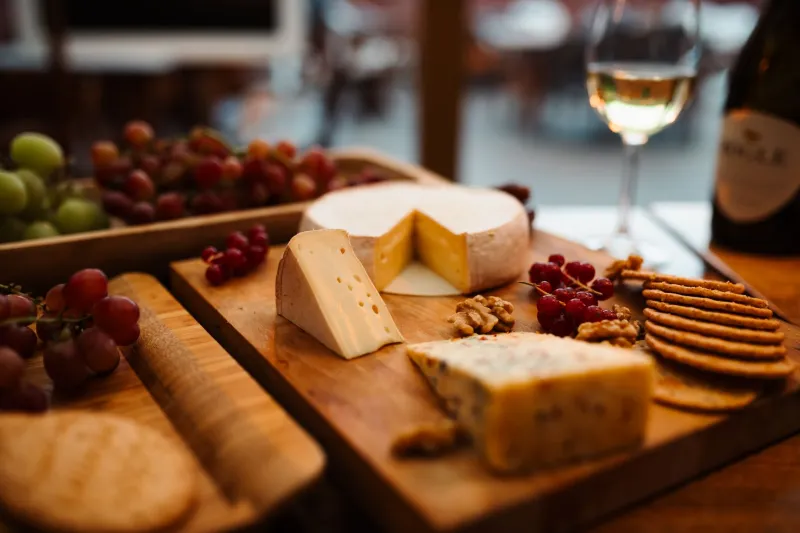
There is a particular moment at a French dinner table — one that many Americans have never experienced — when the meal does not simply end. It transforms. The plates are cleared, conversation settles into something unhurried, and a wooden board arrives bearing a curated selection of cheeses, each chosen with the same deliberateness applied to the entrée. This is the plateau de fromages, and for the better part of a century, it has been one of the most quietly civilized rituals in French dining culture.
In the United States, that ritual has long been an anomaly — something encountered in Parisian bistros or the pages of culinary memoirs, but rarely at the American dinner table. That, however, is changing.
A Course Reclaimed
The cheese course, as practiced in France, is neither a snack nor an appetizer. It occupies a precise structural position within the meal: after the main course, before dessert, and always accompanied by wine. Its purpose is not simply sustenance. It is a moment of deceleration — an invitation to linger, to taste with intention, and to allow the palate a kind of savory farewell before sweetness takes over.
American dining culture, historically oriented toward efficiency and abundance, has not always made room for such deliberate pauses. Cheese, when it appeared at all, tended to arrive at the beginning of a meal as part of a charcuterie spread, or was folded into a dish rather than celebrated on its own. The idea of a dedicated cheese course felt, to many diners, like an unnecessary formality.
But formality, it turns out, is precisely what a segment of American diners is now seeking.
What Sommeliers Are Noticing
"There's been a meaningful shift in how guests approach the end of a meal," says one sommelier at a well-regarded French brasserie in New York. "Five years ago, very few tables would inquire about cheese after their entrée. Now we have guests who plan for it — who actually save room and ask about pairings in advance."
This observation is echoed across fine dining establishments in cities like Chicago, San Francisco, and Washington, D.C. The American palate, shaped in part by the artisan cheese boom of the past two decades, has grown considerably more sophisticated. Dedicated cheese shops, farm-to-table producers, and the broader food literacy cultivated by culinary media have all contributed to a public that is no longer intimidated by a runny Époisses or a wedge of aged Comté.
What was once considered esoteric is now, for a growing cohort of diners, deeply appealing.
The Structure of a Proper Cheese Course
For those unfamiliar with the tradition, the French cheese course follows a loose but intentional logic. A well-composed board typically offers variety across three dimensions: texture, milk type, and intensity.
A classic selection might include a soft-ripened cheese such as Brie de Meaux, a pressed and aged variety like Gruyère or Beaufort, and a blue cheese — perhaps Roquefort, with its assertive, mineral character. The progression moves, generally, from milder to more pungent, allowing the palate to build rather than be overwhelmed.
Accompaniments are kept restrained by design. A few slices of baguette or a simple country bread, perhaps a small pot of honey or a handful of walnuts — nothing that competes with the cheese itself. The wine, ideally, is chosen to complement rather than contrast: a Burgundian Pinot Noir alongside a washed-rind cheese, or a Sauternes to meet the intensity of a strong blue.
"The restraint is the point," explains one cheese director at a specialty retailer in the Northeast. "Americans are accustomed to abundance on a board. The French approach is about focus. Two or three exceptional cheeses, properly tempered, will always outperform a dozen mediocre ones."
Bringing the Tradition Home
For the home entertainer, the cheese course represents one of the more accessible ways to introduce French dining culture into an evening without requiring professional culinary training. The investment is modest; the impression, considerable.
The most important principle is temperature. Cheese served cold is cheese served incorrectly. A proper cheese course requires that selections be removed from refrigeration at least forty-five minutes before service — ideally a full hour. At room temperature, the fats soften, the aromas open, and the full complexity of the cheese becomes available to the palate. This single adjustment, more than any other, separates an ordinary cheese plate from a memorable one.
Selection is the second consideration. Rather than attempting comprehensiveness, a home host is best served by choosing three to five cheeses that represent distinct styles. A local American cheese — perhaps an aged cheddar from Vermont or a California-made Camembert-style — can sit comfortably alongside its French counterparts, and often opens an interesting conversation about terroir and regional character.
Finally, timing matters. The cheese course should arrive after the main course has been cleared and before any dessert is served. Pouring a fresh glass of wine at this juncture — or, for the more adventurous, offering a small pour of something unexpected, such as a dry sherry or a light Beaujolais — signals to guests that the evening is not winding down but simply entering a different register.
Why Now?
The timing of this cultural recalibration is not accidental. In the years following the pandemic, many American diners emerged with a renewed appetite for meals that feel meaningful rather than merely convenient. The rise of the extended dinner — the kind that unfolds over several hours, with conversation and intention — has created natural space for courses that once seemed impractical.
Restaurant owners who have introduced or expanded their cheese programs report that the response has been largely enthusiastic, particularly among guests in the thirty-five-to-fifty-five demographic. These are diners who have traveled, who have eaten well, and who are increasingly interested in experiences that reward attention.
"The cheese course asks something of you," notes one restaurateur who recently introduced a curated fromage selection at her Washington, D.C. brasserie. "It asks you to slow down, to taste carefully, to be present. And I think people are hungry for that kind of invitation right now."
An Elegant Argument for Slowing Down
The French have understood for centuries that a great meal is not simply a sequence of dishes — it is a shaped experience, with rhythm and pacing and deliberate transitions. The cheese course is perhaps the most eloquent expression of that philosophy: a moment that belongs entirely to pleasure, with no obligation beyond presence.
As American dining culture continues to mature, the plateau de fromages is finding its rightful place — not as an affectation borrowed from another culture, but as a genuine expression of the kind of table worth gathering around. At Anisette Brasserie, that philosophy has always been at the heart of what we do. The cheese course, it seems, is simply the rest of the country catching up.