Five Cornerstones of French Brasserie Cooking — And How to Bring Them Home
The Myth of the Unapproachable French Kitchen
French cooking carries with it an intimidating reputation — one built, in part, by decades of culinary mythology and the lingering ghost of formal dining rooms where every sauce involved a reduction that simmered for the better part of a week. The brasserie tradition, however, has always been something different. More democratic, more convivial, and rooted in techniques that, once understood, are eminently repeatable outside a professional setting.
At Anisette Brasserie, our kitchen philosophy is grounded in the belief that great French cooking is not about complexity for its own sake — it is about precision, patience, and the respect of good ingredients. The five techniques outlined below form the backbone of what we do every evening. Master them, and your home cooking will be transformed.
1. Deglazing: Turning the Pan Into the Sauce
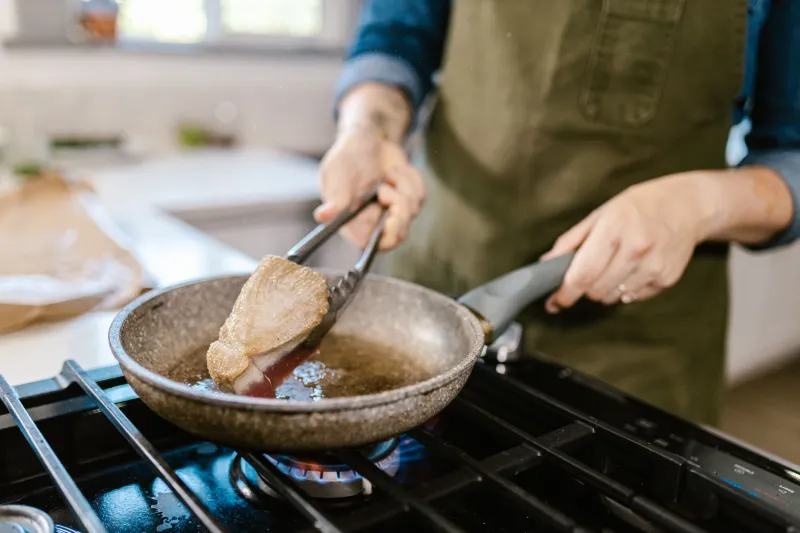
Of all the techniques in the French cook's repertoire, deglazing may offer the most dramatic return on investment. The process is straightforward: after searing meat, fish, or vegetables in a hot pan, you introduce a liquid — wine, stock, cognac, or even a good cider — to lift the caramelized bits (the fond) from the bottom. Those browned remnants are not residue to be scrubbed away; they are concentrated flavor waiting to be dissolved.
The technique: After removing your protein from the pan, pour off any excess fat, leaving approximately one tablespoon. With the heat still high, add half a cup of dry white wine or cognac and scrape the bottom of the pan vigorously with a wooden spoon. Allow the liquid to reduce by half before adding stock, cream, or butter to build the sauce further.
Restaurant-quality recipe — Pan-Seared Duck Breast with Armagnac Pan Sauce: Score the fat of two duck breasts in a crosshatch pattern and season generously with salt and white pepper. Place fat-side down in a cold skillet, then bring to medium heat, rendering the fat slowly for 8–10 minutes until golden and crisp. Flip and cook two minutes more. Remove the duck and deglaze with 3 oz of Armagnac, scraping the fond. Add ½ cup of rich chicken stock and reduce until slightly syrupy. Finish with one tablespoon of cold unsalted butter, swirled off the heat until glossy. Rest the duck five minutes before slicing thinly across the grain.
Sourcing tip: Look for Moulard duck breasts at specialty grocers such as Whole Foods Market or online through D'Artagnan, which ships across the continental United States.
2. Beurre Blanc: The Sauce That Rewards Attention
Beurre blanc — literally "white butter" — is one of those preparations that appears deceptively simple on paper and demands genuine focus in practice. A properly executed beurre blanc is silky, slightly acidic, and rich without being heavy. It is the ideal companion to delicate fish, steamed vegetables, or poached shellfish.
The technique: In a small saucepan, combine two tablespoons of finely minced shallots with ¼ cup of dry white wine and ¼ cup of white wine vinegar. Reduce over medium heat until only a tablespoon of liquid remains. Remove from heat and, working quickly, whisk in cold unsalted butter — cut into half-inch cubes — one piece at a time. The key is temperature: the pan should be warm enough to melt the butter but never so hot that the emulsion breaks. Season with salt and a squeeze of lemon.
Restaurant-quality recipe — Halibut with Beurre Blanc and Chervil: Sear a 6 oz halibut fillet in clarified butter until golden on both sides and just cooked through. Plate over a small mound of blanched haricots verts and spoon the warm beurre blanc generously around the fish. Garnish with fresh chervil and a few capers.
Sourcing tip: European-style butters with higher fat content — such as Plugrá or Kerrygold — produce a notably richer, more stable beurre blanc than standard American supermarket butter.
3. The French Braise: Low, Slow, and Deeply Rewarding
Braising is the technique that separates the patient cook from the impatient one, and it is responsible for some of the most celebrated dishes in the brasserie canon — from bœuf bourguignon to coq au vin. The principle is simple: a tougher cut of meat is seared to develop color, then submerged partially in flavorful liquid and cooked at low temperature for an extended period until it becomes extraordinarily tender.
The technique: Always sear your protein in batches in a heavy Dutch oven — overcrowding the pan causes steaming rather than browning. Build your aromatic base (onion, carrot, celery, garlic) in the same pot after the meat is removed. Deglaze, return the meat, add your braising liquid to halfway up the protein, and transfer to a 325°F oven for two to three hours, depending on the cut.
Restaurant-quality recipe — Braised Short Ribs with Herbes de Provence: Season four bone-in beef short ribs heavily with salt and pepper. Sear in batches in a Dutch oven with a neutral oil until deeply browned on all sides. Set aside. Sauté one diced onion, two carrots, and three garlic cloves in the remaining fat. Add two tablespoons of tomato paste and cook one minute. Deglaze with one cup of red wine, then add two cups of beef stock and a bouquet garni of thyme, rosemary, and bay leaf. Return the ribs, cover, and braise at 325°F for 2.5 hours. Skim the braising liquid, reduce it by half on the stovetop, and serve over creamy potato purée.
4. Proper Vinaigrette: The Art of the Emulsification
French cooks take their salads seriously — and the vinaigrette is where that seriousness begins. A proper French vinaigrette is not merely oil and vinegar shaken together in a jar. It is an emulsion, carefully balanced and seasoned, that clings to each leaf and enhances rather than masks the greens beneath.
The technique: The classic ratio is three parts oil to one part acid, but the real secret lies in the mustard. A small amount of Dijon mustard acts as an emulsifier, binding the oil and vinegar into a cohesive, creamy dressing. Whisk the mustard and vinegar together first, then stream in the oil slowly while whisking continuously. Season aggressively with salt, freshly cracked pepper, and a pinch of sugar if needed.
Restaurant-quality recipe — Frisée aux Lardons: Combine one teaspoon of Dijon mustard with two tablespoons of sherry vinegar. Slowly whisk in six tablespoons of good olive oil. Season well. Render cubed lardons (or thick-cut bacon) until crisp. Toss frisée lettuce with the warm vinaigrette and top with the lardons and a perfectly poached egg. Finish with cracked pepper and fleur de sel.
5. Resting and Carving: The Discipline of Patience
The final technique is behavioral rather than technical, and it may be the most difficult for eager home cooks to observe. Resting cooked meat — allowing it to sit undisturbed for a period before slicing — is non-negotiable in a professional French kitchen. During this rest, the muscle fibers relax and the juices redistribute throughout the cut, producing a more evenly moist and flavorful result.
The guideline: Rest smaller cuts such as chicken breasts or fish fillets for three to five minutes. Larger roasts and braised items benefit from ten to fifteen minutes of rest, loosely tented with foil. Resist the impulse to cut immediately, regardless of how appetizing the aroma may be.
The Brasserie Spirit at Home
Mastering these five techniques will not make you a Michelin-starred chef overnight — nor should that be the ambition. What they will do is give you the tools to cook with confidence, to understand why a dish works, and to bring the warmth and generosity of the brasserie table into your own home. At Anisette Brasserie, we believe that great French cooking is ultimately an act of hospitality. These techniques are simply the vocabulary through which that hospitality is expressed.