Planche Parfaite: How to Assemble a French Charcuterie Board That Commands the Table
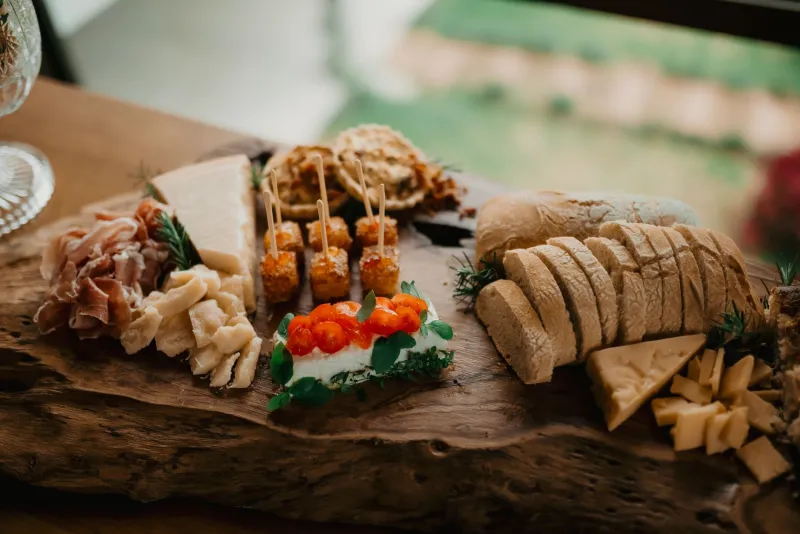
There is a particular kind of hospitality embedded in the French charcuterie board — one that communicates abundance without extravagance, and intention without formality. Long before the term entered the American entertaining lexicon, French households and brasseries alike were arranging cured meats, ripened cheeses, cornichons, and mustard onto wooden planks with an unhurried confidence that made the whole affair feel effortless. It was never effortless, of course. It was considered.
For the American home cook eager to bring a touch of that Parisian ease to the table, the charcuterie board offers an ideal entry point — no culinary school required, no elaborate technique to master. What it does demand is an understanding of the tradition behind it, a discerning eye for quality ingredients, and a sense of how flavors and textures should speak to one another across the board.
A Tradition Rooted in Craft and Necessity
The word charcuterie derives from the French chair cuite, meaning cooked flesh, and the guild of charcutiers that formalized the trade in 15th-century France was responsible for preserving and preparing pork in all its forms. Salting, smoking, drying, and curing were not merely culinary techniques — they were methods of survival, ways of extending the usefulness of an animal through the leaner months of the year.
Over centuries, what began as practical necessity evolved into a refined craft. The French charcutier became an artisan, producing pâtés, terrines, saucissons, and rillettes with the same pride a baker might bring to a proper baguette. By the time the brasserie culture of Paris was in full bloom in the 19th century, a well-composed charcuterie plate had become a civilized preamble to a longer meal — something to occupy the hands and stimulate conversation while the kitchen prepared what was to follow.
That spirit of the leisurely, sociable starter is precisely what a well-built board at home should evoke.
Selecting Your Meats: Quality Over Quantity
The foundation of any respectable French charcuterie board is its cured meats, and the guiding principle here is restraint. Three to five selections, chosen with care, will always outperform a crowded board of mediocre options.
Begin with a dry-cured saucisson sec — the French equivalent of a salami, typically made from pork and seasoned with black pepper, garlic, or herbs. Slice it thinly and fan the pieces so guests can help themselves without disrupting the arrangement. A good saucisson has a pleasant funk, a firm bite, and a clean finish.
Complement it with something more unctuous: rillettes, a preparation of slow-cooked, shredded pork (or duck) packed in its own fat, served in a small crock alongside the board. Its spreadable richness plays beautifully against the drier, firmer meats. If you can locate a quality pâté de campagne — a rustic country pâté with visible texture and a depth of flavor — add a generous slice or two. American specialty grocery stores, French delicatessens, and online artisan purveyors increasingly carry these items at a level of quality that would have been difficult to find even a decade ago.
For a fourth element, consider jambon de Paris, a mild, delicately flavored cooked ham that offers textural contrast and a gentler note amid the more assertive cured selections.
Choosing Cheeses That Complement, Not Compete
Cheese is not an afterthought on a French charcuterie board — it is a co-equal presence, and its selection deserves the same deliberation. Aim for variety across texture and intensity: a soft, bloomy-rind cheese such as Brie de Meaux or a domestic equivalent; an aged, firm option like Comté, whose nutty complexity pairs beautifully with cured meats; and something with a more assertive character, perhaps a wedge of Roquefort or a washed-rind cheese such as Époisses, for guests who appreciate a bolder statement.
Allow cheeses to come to room temperature at least forty-five minutes before serving. Cold cheese is muted cheese, and the effort you have invested in sourcing quality deserves to be tasted fully.
Accompaniments: The Details That Distinguish the Board
French charcuterie boards are distinguished as much by their supporting cast as by their principal ingredients. Cornichons — those small, tart French pickles — are non-negotiable. Their acidity cuts through the fat of the meats and cleanses the palate between bites. A small dish of whole-grain Dijon mustard fulfills a similar function, adding brightness and a mild heat that animates even the simplest slice of saucisson.
Fresh and dried fruits add a note of sweetness that balances the savory elements: thin slices of pear, a handful of green grapes, or a small pile of dried apricots all serve the purpose admirably. A few toasted walnuts or Marcona almonds introduce textural interest. Sliced baguette — ideally from a local bakery that takes the craft seriously — and a selection of plain crackers provide the vehicle through which everything else is enjoyed.
Honey, particularly a floral variety such as lavender or acacia, warrants a small pot on the side. Drizzled over a piece of aged cheese, it produces one of those simple combinations that stops conversation briefly.
Arrangement: The Aesthetic of Abundance
The visual presentation of a charcuterie board is not vanity — it is hospitality made visible. Begin by placing your crocks, small bowls of mustard and cornichons, and any contained elements first, as these anchor the composition. Fold or fan your sliced meats in overlapping layers; the saucisson in a loose spiral, the jambon in soft, billowing folds. Place cheeses at intervals so that no single corner of the board is without interest.
Fill the negative space with crackers fanned in clusters, fruit tucked into gaps, and nuts scattered with a light hand. The goal is a board that looks generously abundant but not chaotic — one where every element is accessible and the eye moves across the surface with pleasure.
Pairing Your Board with the Right Pour
No French charcuterie board is complete without a considered beverage alongside it. A crisp Alsatian Riesling or a Muscadet from the Loire Valley cuts beautifully through the richness of the meats. For those who prefer red wine, a light-bodied Beaujolais — particularly a Villages or a cru such as Morgon — offers fruity brightness without overwhelming the more delicate flavors on the board. Should the occasion call for something sparkling, a Crémant d'Alsace provides effervescence and finesse at a price point more forgiving than Champagne.
For guests who do not drink alcohol, a sparkling water with a slice of lemon or a lightly herbed shrub offers the same palate-cleansing function.
Bringing the Brasserie Home
What makes the French charcuterie board so enduring — and so transferable to the American table — is that it asks very little of the cook beyond thoughtfulness. There is no heat required, no timing to manage, no last-minute anxiety. What it does ask is that you approach the selection of each element with the seriousness it deserves, that you allow the ingredients room to express themselves, and that you set the board before your guests as an invitation to slow down and begin the meal with intention.
At Anisette Brasserie, we believe that the pleasures of the French table are not reserved for those who dine out. They belong equally to those who gather at home, pour a glass, and take the time to compose something beautiful before the first course is even announced.