Less Is More: How the French Bistro Dessert Is Teaching Americans to Appreciate the Beauty of Restraint
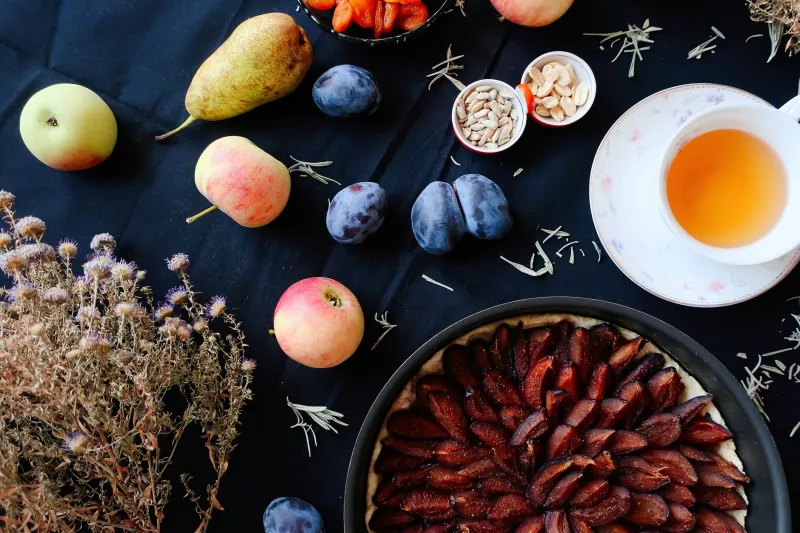
There is a particular moment that many American diners have come to expect at the conclusion of a restaurant meal: the arrival of a dessert that announces itself before it reaches the table. Towers of spun sugar. Molten cakes erupting on cue. Sauces poured tableside with ceremonial gravity. These productions have become so commonplace in upscale American dining that they have ceased to feel special — and for a growing number of discerning guests, they have begun to feel like a distraction from the thing that matters most: flavor.
French bistro desserts operate on an entirely different philosophy. They do not perform. They simply are.
The Discipline Behind Apparent Simplicity
To understand why a French île flottante — those ethereal poached meringues adrift in a pool of crème anglaise — carries such enduring appeal, one must first appreciate what it demands of the kitchen. There is no architectural flourish to conceal an imprecise custard. There is no dramatic garnish to redirect attention from a meringue that has been overworked. Every element must be executed with precision, because nothing is hidden.
This is the paradox at the heart of French bistro pastry: simplicity is among the most technically demanding disciplines a cook can pursue. A tarte tatin, that celebrated inversion of buttery pastry and caramelized apples born from a happy accident in the Loire Valley, exposes every decision the cook has made. The degree of caramelization. The quality of the butter. The structural integrity of the pastry once it has been unmolded onto the plate. There is nowhere to hide, and therein lies the artistry.
American pastry culture has long celebrated the visible — the layer cake with its dramatic cross-section, the sundae with its cascading toppings, the plated dessert that photographs beautifully under the warm light of a dining room. These are pleasures unto themselves, and they have their place. But they reflect a different value system than the one that governs the French bistro kitchen, where the goal is not to impress at first glance but to satisfy deeply and lastingly.
Why American Diners Are Beginning to Take Notice
Something has shifted in recent years among American fine diners. Perhaps it is the accumulated fatigue of spectacle — the sense that when every meal concludes with a theatrical flourish, the theater loses its meaning. Perhaps it is the growing influence of French culinary culture on the American restaurant scene, as chefs trained in classical traditions bring their sensibilities to cities from New York to Los Angeles to New Orleans. Or perhaps it is simply that, after years of dessert maximalism, the pendulum is swinging back toward something more considered.
Whatever the cause, there is a discernible appetite among American diners for desserts that prioritize substance over showmanship. The evidence appears in reservation books and in the dishes that generate conversation long after a meal has ended. A perfectly made crème brûlée — its surface lacquered to an amber crust, its interior trembling with barely-set custard — leaves an impression that no amount of spun sugar can replicate. A mousse au chocolat, dense and bittersweet, served simply in a ramekin with a single curl of cream, speaks with an authority that elaborate plating rarely achieves.
What these desserts share is a commitment to the ingredient itself. French bistro cooking, at its finest, operates from the conviction that quality materials require only the most judicious intervention. When the cream is exceptional and the vanilla is genuine, the custard needs nothing else. When the apples are properly chosen and the caramel is taken to its darkest permissible edge, the tarte tatin is complete. Addition, in this framework, becomes subtraction — each unnecessary element diminishing rather than enhancing the whole.
The Role of Technique in the Understated Dessert
It would be a mistake to conflate restraint with ease. The French bistro dessert tradition is built upon a foundation of classical technique that takes years to master and a lifetime to refine. The proper tempering of chocolate, the precise temperature management required for a successful soufflé, the patience demanded by a slow-cooked compote — these are not shortcuts but disciplines.
Consider the madeleine, that small shell-shaped cake made famous by Proust's involuntary memory. In its ideal form, it possesses a golden exterior that yields to a tender, butter-saturated crumb, with a characteristic hump that signals correct batter resting time and oven temperature. Served warm alongside a small cup of coffee or an herbal infusion, it requires nothing further. Yet achieving that ideal demands attention to a dozen variables that an inattentive baker might overlook.
This is precisely why the French bistro dessert rewards the diner who pays attention. The pleasure is not immediate and overwhelming, as a theatrical dessert intends to be. It is cumulative and nuanced — the kind of satisfaction that deepens with each successive bite and lingers well after the plate has been cleared.
What the American Table Can Learn
For those who entertain at home or who seek to deepen their understanding of the French dining tradition, the bistro dessert offers both practical guidance and a broader philosophical lesson. Practically speaking, these desserts are often more accessible than their elaborate American counterparts. A pot de crème requires only eggs, cream, sugar, and a quality chocolate, along with the patience to bake it gently in a water bath. A clafoutis — that rustic Limousin batter cake studded with cherries — comes together in under an hour and emerges from the oven looking precisely as it should: unadorned and honest.
More broadly, the French bistro dessert invites a reconsideration of what a meal's conclusion is meant to accomplish. If the purpose of dessert is to leave the diner in a state of contented satisfaction rather than sugary overwhelm, then restraint is not a limitation but a strategy. The meal ends not with a flourish but with a quiet punctuation mark — a final note that completes the composition without overpowering it.
At Anisette Brasserie, this philosophy informs every aspect of how we think about the table. The French have long understood that elegance is not a matter of accumulation. It is a matter of knowing what to leave out. In the bistro dessert, that wisdom finds perhaps its most delicious expression.
The American diner who discovers it for the first time often describes a similar sensation: not the loud satisfaction of excess, but something quieter and more lasting. The feeling, as one leaves the table, that one has been fed rather than merely entertained.