Patience as a Philosophy: What French Service Teaches Us About the True Meaning of Hospitality
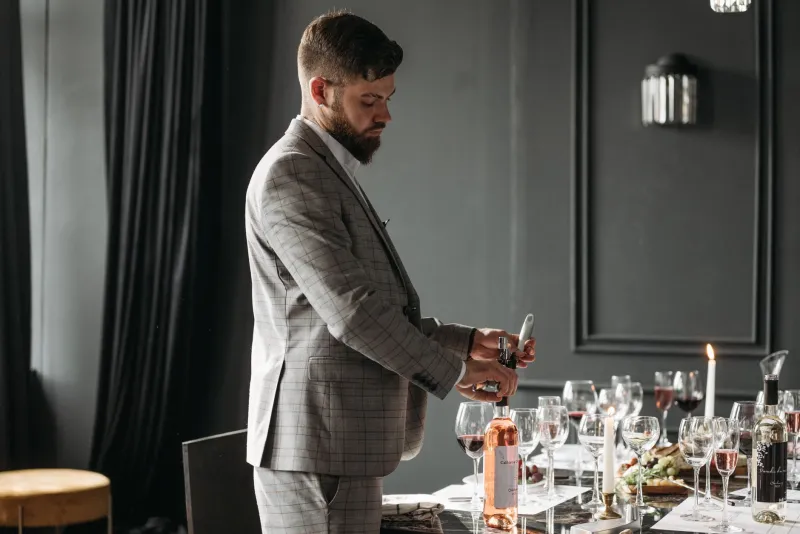
There is a particular moment in a well-executed French meal — somewhere between the amuse-bouche and the entrée — when a guest realizes that no one is rushing them. The water glass is full. The sommelier has materialized, offered a quiet recommendation, and retreated without fanfare. The bread arrived warm, without being asked. This is not coincidence. This is craft.
For generations, the French have understood something that the American restaurant industry is only now beginning to fully appreciate: that service is not a function of efficiency. It is an expression of respect.
The Choreography Behind the Curtain
In the traditional French brasserie, service operates according to an almost theatrical logic. Each member of the floor team has a defined role — the maître d'hôtel, the chef de rang, the commis — and each move is calibrated to maintain an atmosphere of effortless ease. Plates are set and cleared with precision. Eye contact is offered at the right moment, not the convenient one. The pacing between courses is determined not by the kitchen's output alone, but by the rhythm of the guests themselves.
"French service is built on observation," explains one veteran hospitality consultant who has worked with fine dining establishments across New York and Chicago. "The server isn't just delivering food. They're reading the table — the pace of conversation, the rate at which wine is being consumed, whether a guest looks reflective or ready for the next course. That information shapes everything."
This attentiveness stands in stark contrast to the dominant American restaurant model, which has historically prized turnover. In a culture where a two-hour dinner is often considered leisurely and a three-hour meal verges on the extraordinary, the idea of deliberately slowing the pace of service can feel almost counterintuitive to operators focused on revenue per seat.
Speed Versus Intention
The American dining experience, for all its vibrancy and innovation, has long been shaped by an implicit contract with efficiency. Guests are greeted quickly, menus presented immediately, orders taken before the table has fully settled. The check, in many establishments, arrives almost before the dessert plates are cleared — a subtle signal that the evening has reached its conclusion.
This is not inherently wrong. For casual dining, it is entirely appropriate. But as American diners grow more sophisticated in their expectations — returning from travels abroad, seeking out tasting menus, engaging with the growing culture of experiential dining — a hunger has emerged for something more considered.
"There's a guest who walks into our dining room and wants to feel held," says a sommelier at a celebrated French-inspired restaurant in Washington, D.C. "They don't want to feel managed. They want to feel like their evening matters — like we've thought about it as carefully as the chef has thought about the food."
That distinction — between managing a table and honoring it — is precisely where French service philosophy offers its most valuable lessons.
The Role of the Sommelier in Setting the Tempo
Perhaps no single figure in the dining room does more to establish the evening's pace than the sommelier. In the French tradition, wine service is never an afterthought; it is a conversation that unfolds across the entire meal. A skilled sommelier does not simply pour. They listen, suggest, and guide — often revealing something about the kitchen's intentions that the menu alone cannot convey.
"When I approach a table, I'm not there to sell a bottle," notes one sommelier who trained in Lyon before relocating to a prominent New York brasserie. "I'm there to understand what kind of evening they want to have. Are they celebrating? Are they exploring? Do they want to be challenged, or do they want comfort? The wine program should answer those questions before the food even arrives."
This philosophy of attentive inquiry — rather than scripted upselling — is increasingly being adopted by American establishments that recognize the sommelier as a steward of the guest experience, not merely a beverage specialist.
What American Restaurants Are Getting Right
The shift is already underway. Across major American cities, a cohort of restaurants — many of them drawing direct inspiration from the French brasserie tradition — have begun restructuring their service models to prioritize intentionality over speed. Staff training programs now incorporate elements of French hospitality philosophy. Service manuals reference the importance of silence, of restraint, of knowing when not to intervene.
Some establishments have gone further, formally extending their expected dining durations and communicating this to guests at the time of reservation. Rather than apologizing for the pace, they celebrate it — framing a two-and-a-half-hour dinner not as an inconvenience but as the experience itself.
Reservation platforms and hospitality groups have noted a corresponding shift in guest behavior. Diners are increasingly willing — even eager — to commit to longer dining windows when the experience is framed with clarity and intention. The meal, in other words, has become the destination.
The Table as a Sanctuary
At its core, what French service offers is a simple but profound gift: the sense that the table belongs to the guest. Not to the kitchen's timeline, not to the restaurant's seating rotation, but to the people who have gathered around it. This is why the ritual of the aperitif matters. Why the cheese course deserves its own unhurried moment. Why the final coffee should never feel like a dismissal.
In the French tradition, lingering is not an imposition. It is a compliment.
As American dining culture continues to evolve — as guests seek experiences that nourish not only the appetite but the spirit — the lessons embedded in French service grow ever more relevant. The best hospitality, it turns out, is not about doing more. It is about doing less, with greater care, and allowing the evening to breathe.
At Anisette Brasserie, we have always believed that a meal worth eating is a meal worth savoring. The table is set. There is no hurry.