The Art of the Invisible Waiter: How French Service Masters the Balance Between Presence and Absence
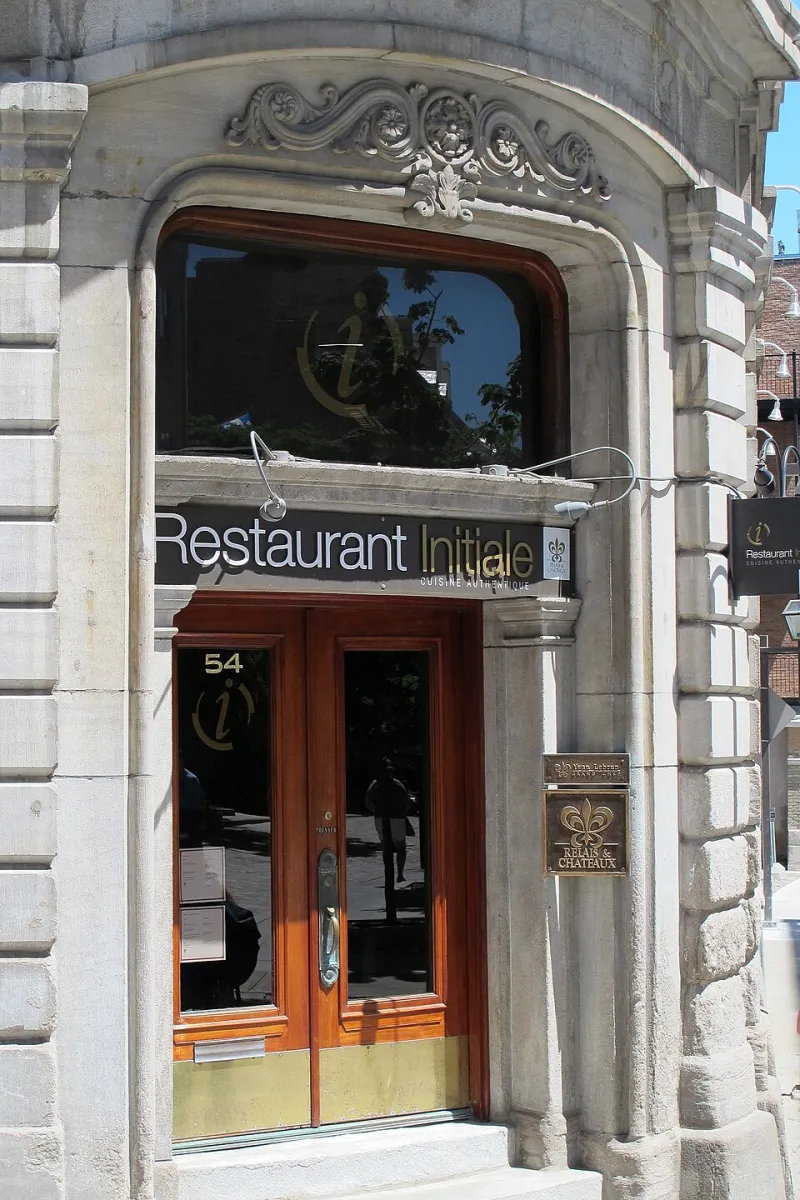
Photo: Dslcards, CC BY-SA 4.0, via Wikimedia Commons
At a certain point during a long dinner in Paris, you will notice something unusual: you cannot remember the last time your server spoke to you, and yet your glass is full, your bread plate has been quietly refreshed, and the empty appetizer dishes have disappeared without interruption. You were engaged in conversation. You were laughing at something your companion said. And the table, somehow, was being tended with perfect attentiveness the entire time.
This is the invisible waiter—not absent, not neglectful, but operating in a register so attuned to the rhythm of the table that the service itself becomes imperceptible. It is among the most sophisticated hospitality skills in the world, and it is one that French brasserie culture has refined over generations.
Observation as the Foundation of Service
The French tradition of service is built, above all else, on the discipline of watching. Before a skilled brasserie server approaches a table, they have already gathered considerable information: the pace of the conversation, the body language of the diners, the rate at which glasses are being raised, the angle of a fork resting on a plate. These are not minor details. They are the data points that determine whether an approach is warranted or whether continued distance is the more generous choice.
This observational philosophy is taught explicitly in formal French hospitality training, where students learn to read a dining room the way a conductor reads an orchestra—attending to the whole while remaining alert to individual signals. A diner who leans forward and scans the room is communicating a need. A diner who is mid-sentence, head tilted toward their companion, is communicating something entirely different. The trained server responds to each with appropriate action, or deliberate inaction.
American service training, by contrast, has historically emphasized frequency of contact as a proxy for quality. The assumption is that regular check-ins—How is everything tasting? Can I get you anything else? Are you still working on that?—signal attentiveness and care. In practice, however, these interruptions often function as intrusions, fragmenting conversation and reminding diners that they are in a commercial transaction rather than a private experience.
The Choreography of Disappearance
There is a specific physical vocabulary to French brasserie service that enables its characteristic invisibility. Servers move along the perimeter of a dining room rather than through its center. They approach from the side rather than head-on, reducing the visual disruption of their presence. They communicate with colleagues through glance and gesture rather than audible instruction. And they develop what experienced maîtres d' sometimes describe as a peripheral awareness—a capacity to monitor multiple tables simultaneously without appearing to watch any of them directly.
The timing of service actions is equally precise. Plates are cleared only when all diners at a table have finished, not when the first fork is set down. Wine is poured during natural pauses in conversation, not across the middle of a sentence. The check is presented when requested, not preemptively placed on the table as a subtle signal that the evening is drawing to a close.
Each of these practices reflects the same underlying value: the diner's experience takes precedence over the operational convenience of the restaurant. The table belongs to the guests for the duration of their meal. The server's role is to support that experience, not to manage it.
What American Service Is Learning
It would be unfair to suggest that American hospitality is without sophistication. The country has produced exceptional service cultures, particularly in fine dining establishments in cities like New York, San Francisco, and Chicago. But the broader American restaurant industry has been slow to move away from the check-in model, in part because it conflates visibility with value.
There are signs of evolution. A growing number of American restaurants—many of them influenced directly by French brasserie culture—are training their staff in what might be called responsive service: the practice of waiting for a signal before approaching, rather than approaching on a fixed schedule. These establishments are finding that diners linger longer, spend more, and report higher satisfaction when they feel their autonomy over the table has been respected.
The lesson is not that American servers should become aloof or indifferent. The warmth and directness that characterizes much of American hospitality is a genuine asset, and it need not be abandoned in pursuit of French restraint. What is worth adopting is the underlying discipline: the commitment to observation before action, and the understanding that sometimes the most generous thing a server can do is nothing at all.
Trust as a Service Philosophy
At the heart of the invisible waiter is a form of trust. The French brasserie trusts its diners to signal when they require assistance. It trusts that an empty glass will be noticed and that a gesture—a slight turn of the head, a glance toward the room—is sufficient to summon attention. This trust is not passive. It is actively cultivated through the consistency of the service environment: when diners know from experience that their needs will be met without having to ask repeatedly, they relax into the meal in a way that fundamentally changes the quality of the experience.
This is, ultimately, what distinguishes attentiveness from intrusion. Attentiveness is the server who appears the moment a diner sets down a menu, having observed the gesture from across the room. Intrusion is the server who arrives mid-bite to ask whether the food is acceptable. The former demonstrates mastery. The latter, however well-intentioned, demonstrates that the server's presence is organized around their own schedule rather than the diner's need.
The Standard Worth Pursuing
For American restaurants genuinely committed to elevating their hospitality, the French model of service offers a clear and demanding standard. It requires investment in training—not in scripts or sequences, but in the far more difficult discipline of observation and restraint. It requires a willingness to trust that diners are capable of directing their own experience. And it requires the institutional confidence to let a table sit in comfortable silence without interpreting that silence as a service failure.
The invisible waiter is not a paradox. It is the highest expression of a service philosophy that places the diner, rather than the restaurant, at the center of the meal. When that philosophy is realized fully, the evening unfolds with an ease that guests will remember long after the last course has been cleared—not because of what the server did, but because of how little they noticed it happening.