Between Dinner and Dessert: The Case for Restoring the Cheese Course to Its Rightful Place at the American Table
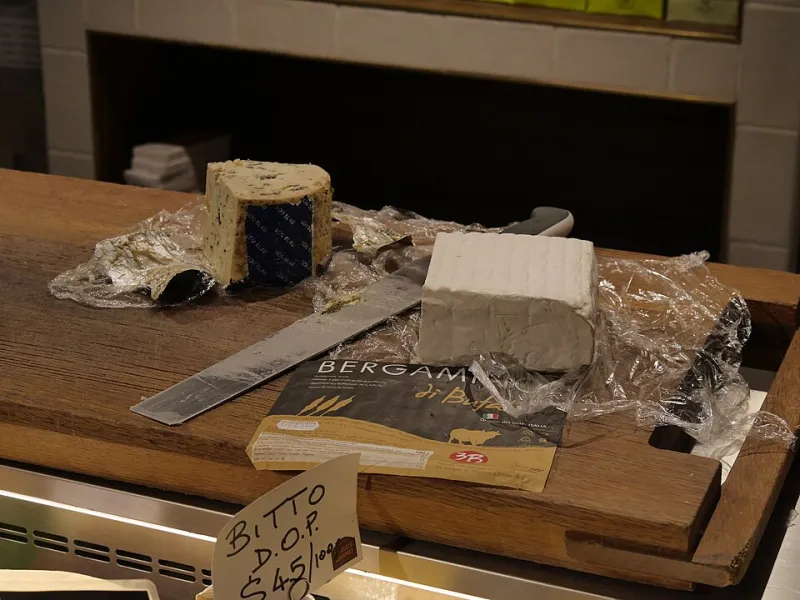
Photo: Peachyeung316, CC BY-SA 4.0, via Wikimedia Commons
There is a particular kind of satisfaction that arrives not from eating but from pausing. The French have institutionalized this understanding in the form of the cheese course — that deliberate interlude between the main dish and the dessert, a moment designed not to fill but to extend, not to rush but to rest. It is one of the most elegant structural contributions that French dining culture has made to the architecture of a meal, and it is one that American tables have, for the most part, ignored.
Until recently.
Across American fine dining establishments and in the homes of a growing number of intentional hosts, the cheese course is making a return — not as an affectation of Francophilia, but as a genuine answer to a problem that many Americans have begun to feel without being able to name it: the meal that ends too quickly, the evening that closes before the conversation has properly opened.
Why the French Pause Here
To appreciate the cheese course, one must first understand its function within the French dining structure. The meal, in the classical French tradition, is not conceived as a series of dishes but as a progression — an arc with its own pacing, its own emotional logic. The main course is the meal's center of gravity: substantial, complex, the point toward which the apéritif and the entrée have been building. Dessert, by contrast, is lighter, sweeter, a gentle conclusion.
The cheese course occupies the space between these two registers. It is savory but not heavy, complex but not demanding. It invites the palate to linger in a different mode — exploratory rather than satisfying, contemplative rather than conclusive. The wines that accompany it tend toward the elegant: a Sauternes, a late-harvest Alsatian Riesling, or simply the last of the red that accompanied the main course. The conversation, by this point in the evening, has typically found its depth.
This is the cheese course's true purpose: not to add another element to the meal but to create a space in which the evening can expand. It is an architectural device for prolonging the best part of any dinner — the moment when the food has been consumed but no one is quite ready to leave.
The American Resistance and Its Origins
The cheese course's absence from most American dining culture is not an accident of taste. It reflects a broader cultural orientation toward efficiency — toward the meal as something to be completed rather than inhabited. The American dinner party has long been structured around a beginning, a middle, and an end that arrives with some urgency. The cheese course, which asks guests to remain at the table for another twenty or thirty minutes in a mode that is neither eating nor drinking nor departing, has no natural home in this structure.
There is also, frankly, a fear of pretension. Many American hosts who might otherwise welcome the tradition worry about the social legibility of serving a cheese course to guests who are unfamiliar with the practice. Will it seem affected? Will it read as a performance of sophistication rather than an expression of genuine hospitality?
These concerns are understandable and not without foundation. But they rest on a misunderstanding of what the cheese course actually requires — which is not sophistication, but simply intention.
Selecting Cheese by Season and Mood
The most common obstacle for American hosts approaching the cheese course for the first time is selection. The cheese counter at a well-stocked American market can be genuinely overwhelming, and the temptation to either over-select or default to the familiar (a block of cheddar, a wedge of brie) is considerable. The French approach to this question is characteristically direct: choose three to five cheeses that represent different textures and intensities, and let the season guide you.
Spring and early summer favor fresh and young cheeses: a bright chèvre, a mild ricotta pressed into a small mold, a young sheep's milk cheese with a delicate rind. These lighter selections echo the season's general temperament and pair beautifully with crisp whites and light reds.
Late summer and autumn welcome more assertive selections: a washed-rind cheese with its characteristic pungency, an aged Comté or Gruyère with its deep, nutty complexity, a blue-veined selection for those at the table who appreciate intensity. These cheeses carry the richness of the season and hold their own against the fuller-bodied wines that autumn typically calls for.
Winter invites the most robust selections: aged cheddars (the American table need not apologize for these), double- and triple-crème cheeses that are almost impossibly rich, a properly aged Roquefort that demands a pour of Sauternes in return. The winter cheese course is the most indulgent and, paired with the right wine, the most memorable.
Regardless of season, the selection should represent at least three textures: something fresh or soft, something firm or semi-firm, and something aged or assertive. This variety ensures that every guest finds something accessible while providing the range of experience that makes the course genuinely interesting.
Accompaniments That Serve Rather Than Compete
The French cheese course is accompanied simply: good bread (a baguette, ideally, or a country loaf with some chew and character), perhaps a small dish of honeycomb or fruit preserves, a handful of walnuts or almonds. The accompaniments exist to serve the cheese, not to distract from it. An American tendency toward elaborate crackers, flavored spreads, and decorative abundance can work against the course's essential purpose, which is to direct attention toward the cheese itself.
Fresh fruit in season — a cluster of grapes in autumn, sliced pears in winter, fresh figs in late summer — is always appropriate and adds a visual generosity to the board without overwhelming the palate.
Introducing the Course Without Apology
For hosts concerned about how to introduce the cheese course to guests unfamiliar with the tradition, the answer is simplicity itself: do not announce it as a French tradition, do not explain its historical context, and do not frame it as an educational experience. Simply bring it to the table.
The board itself communicates everything necessary. Guests who are curious will ask questions; those who simply wish to eat will eat. The course requires no defense because it requires no justification. Good cheese, good bread, and a moment of unhurried time at the table are pleasures that require no cultural preamble.
What the cheese course ultimately offers — to the home entertainer and the fine dining establishment alike — is permission. Permission to slow down, to remain at the table a little longer, to allow the evening to find its own natural conclusion rather than forcing one upon it. In a culture that has grown increasingly uncomfortable with unstructured time, this permission is not a small thing. It is, in fact, precisely what the French have understood all along.