Where the Neighborhood Gathers: The French Boulangerie Spirit and Its American Reinvention
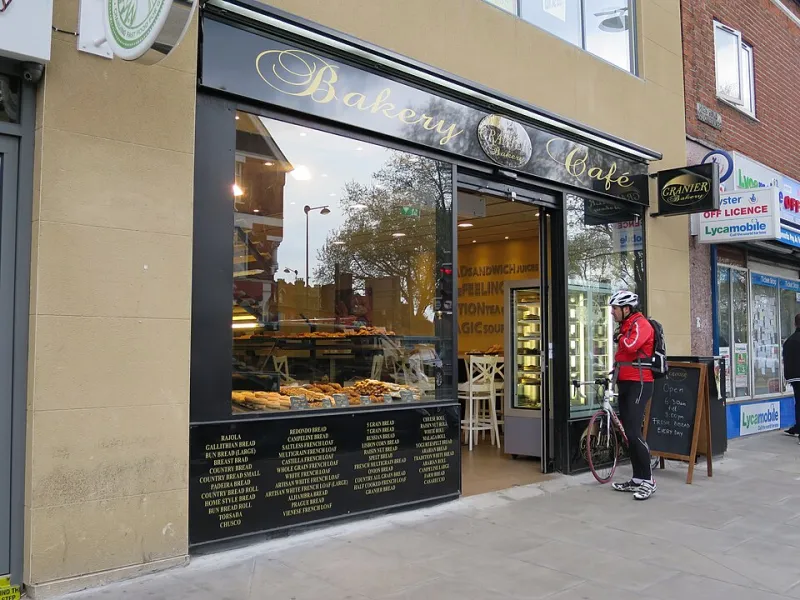
Photo: Alan Stanton, CC BY-SA 2.0, via Wikimedia Commons
On nearly every block of a traditional Parisian arrondissement, there exists a particular kind of institution that operates according to rhythms older than the city itself. The boulangerie opens before dawn, fills the street with the scent of baking bread, and becomes, for the next several hours, the unofficial center of neighborhood life. Regulars arrive in sequence — the early risers, the school-run parents, the retirees with time to linger. The baker knows their names. The coffee is strong and served without flourish. Nobody is rushing anyone out the door.
This is not merely a bakery. It is a social architecture. And Americans, it turns out, have been quietly building their own version of it.
The Return of the Third Place
Sociologists have long used the term "third place" to describe the spaces outside of home and work where community cohesion is formed and maintained. The French boulangerie is, in many respects, the original third place — a location that exists for commerce but functions as something far more significant: a site of daily human ritual, of unhurried exchange, of the kind of belonging that does not require a membership or an agenda.
In the United States, third places have been eroding for decades. The suburban sprawl that followed World War II replaced walkable neighborhoods with automobile-dependent landscapes. Chain coffee shops offered consistency but rarely intimacy. And the rise of digital commerce accelerated a retreat from shared physical space that was already well underway.
What is emerging now — in Brooklyn and Portland, in Nashville and Denver, in smaller cities where the cost of real estate still permits experimentation — is something that looks very much like a correction. Artisanal bakery-cafés, many of them drawing explicit or implicit inspiration from the French boulangerie model, are opening with a clear sense of purpose: to be somewhere people actually want to stay.
More Than a Menu
The distinction between a great artisanal bakery-café and a well-appointed coffee shop is not always immediately visible, but it is consistently felt. It lives in the details: the long communal table that encourages strangers to sit in proximity, the handwritten chalkboard that changes with the season, the proprietor who emerges from the back to discuss the provenance of a particular flour or the sourcing of their cultured butter.
In the French boulangerie tradition, the baker's expertise is not hidden behind a corporate brand identity. It is present, personal, and on display. When a customer at a Paris boulangerie asks why the baguette de tradition tastes different from the one at the shop three streets over, the answer comes with genuine enthusiasm and real knowledge. That transparency — that willingness to be accountable to one's craft — is precisely what American counterparts are beginning to replicate.
"People don't just come here for the croissant," says the owner of a well-regarded bakery-café in Washington, D.C., that has modeled much of its identity on the neighborhood boulangeries she encountered during years spent living in Lyon. "They come because they want to feel like they're somewhere that knows them. The croissant is the reason to walk in the first time. The community is the reason they come back every morning."
The Architecture of Intimacy
French boulangeries are rarely large. Their scale is part of their function. A shop that seats twelve forces a kind of proximity that a sprawling café with forty tables does not. Conversation happens more naturally. Eye contact is harder to avoid. The person behind the counter is close enough to be addressed without raising one's voice.
American versions of this model are beginning to take these spatial lessons seriously. Rather than scaling up to maximize revenue per square foot, the more thoughtful operators are choosing to remain deliberately small — sometimes to the frustration of would-be investors who see unmet demand as a problem to be solved with additional seating.
But the operators who understand what they are building recognize that intimacy is the product, not the side effect. Expand too aggressively and the thing that made the space valuable disappears. The French boulangerie has survived for centuries in part because it has resisted the logic of scale. Its American inheritors are beginning to understand why.
Bread as a Cultural Anchor
There is something symbolically significant about bread as the centerpiece of this movement. Unlike coffee, which can be consumed in motion and alone, bread has always required a table, a knife, something to accompany it. It invites sharing. It implies a meal, or at least the possibility of one. A space organized around bread is, almost by definition, organized around the idea of people eating together.
The French have understood this for generations. The boulangerie is not simply where bread is sold — it is where bread is brought into the life of the community. The baguette tucked under an arm on the walk home is not a grocery item; it is a daily act of participation in a shared culture. Americans are discovering, perhaps somewhat belatedly, that this kind of cultural participation is not something that can be replicated by a subscription delivery service or a supermarket in-store bakery.
What Authenticity Actually Means
The word "authentic" is among the most overused in contemporary food culture, applied so liberally that it has lost much of its meaning. But in the context of the boulangerie model, authenticity refers to something specific: a commitment to process, to place, and to the people who inhabit both.
The most successful American bakery-cafés operating in this tradition are not trying to recreate Paris. They are drawing on the underlying values of the French boulangerie — craft, consistency, community, and genuine hospitality — and expressing them through a distinctly local identity. The sourdough may be leavened with a starter that has lived in the baker's kitchen for a decade. The pastries may incorporate regional ingredients unavailable in any French shop. The space may reflect the aesthetic of its particular American neighborhood rather than any Parisian archetype.
This is not imitation. It is translation. And when it is done well, it produces something that feels neither foreign nor familiar, but quietly, unmistakably necessary — the kind of place a neighborhood did not know it was missing until it arrived.