Lost, Then Found: The Unlikely American Resurrection of Anisette
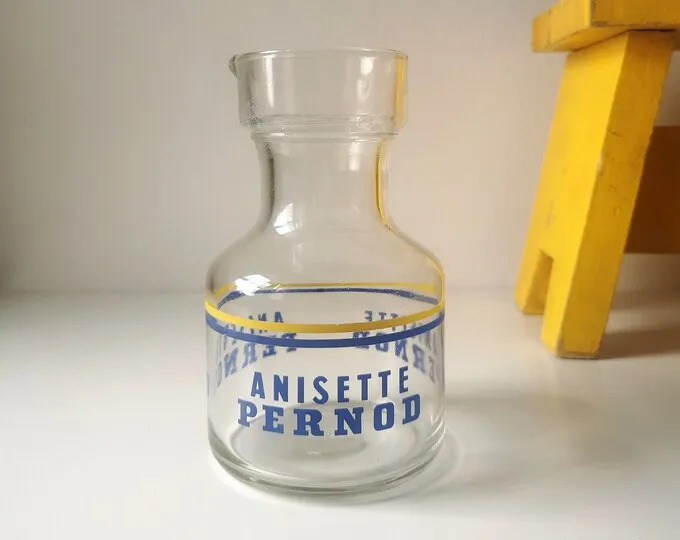
Photo: anisette liqueur glass French brasserie bar vintage bottles, via i.etsystatic.com
There is a particular kind of cultural forgetting that happens not with a bang but with a slow, almost imperceptible drift. No single event condemned anisette to the back shelves of American bars during the latter half of the 20th century. Instead, a confluence of forces — Prohibition's long shadow, the rise of bourbon nationalism, and a postwar suspicion of anything that tasted too European — conspired to push this elegant, anise-forward liqueur into near-total obscurity. That it has returned at all is something of a minor miracle. That it has returned with such conviction is a story worth telling carefully.
A Spirit With Deep Roots
Anisette's lineage in America predates the republic itself. French and Spanish settlers carried their love of anise-flavored spirits to the Gulf Coast long before the United States existed as a nation, embedding the liqueur into the social fabric of cities like New Orleans, Mobile, and Galveston. In the 19th century, anisette was a fixture of the American apéritif hour — lighter in alcohol than absinthe, sweeter in profile, and entirely at home alongside the oysters and charcuterie that defined upscale dining of the era.
Recipes varied considerably by region. New Orleans bartenders often combined anisette with a splash of cream and crushed ice, producing a silky digestif that bore little resemblance to the drier, more assertive preparations favored in French brasseries. In the Creole households of Louisiana, anisette appeared in baking — folded into biscotti-like cookies called anise cakes and stirred into syrups for holiday confections. It was, in short, a spirit that had genuinely naturalized itself into American culinary life.
How Prohibition Changed Everything
The Volstead Act of 1919 did not merely interrupt the production and sale of alcohol in America. It fundamentally restructured the nation's relationship with drinking culture, dismantling the rituals, the glassware, the occasion-specific spirits, and the social grammar that had governed the American bar for generations. When Prohibition ended in 1933, the rebuilding process favored simplicity and volume over nuance and tradition.
Bourbon and rye dominated the postwar American imagination. Gin held its ground in certain coastal enclaves. But the more delicate, ceremony-adjacent spirits — anisette among them — struggled to find relevance in a drinking culture that had grown impatient with anything requiring explanation. The French brasserie tradition, with its unhurried apéritif rituals and its insistence on pairing specific spirits with specific moments, felt foreign in an America that increasingly equated efficiency with sophistication.
By the 1970s and 1980s, anisette had become something of a punchline — a grandmother's liqueur, a dusty bottle at the back of the cabinet, a relic that serious drinkers did not discuss. Its association with the elderly and the unfashionable proved nearly fatal.
The Cities Leading the Revival
The contemporary anisette revival did not begin in New York or Los Angeles, the cities that typically claim ownership of American food and drink trends. It began, fittingly, in New Orleans — the city that never fully abandoned its French brasserie inheritance to begin with.
Bartenders at a handful of French Quarter establishments began quietly reintroducing anisette to their menus in the early 2010s, not as a novelty but as a correction. They argued, persuasively, that the city's culinary identity was incomplete without it. The anisette frappé — anisette poured over shaved ice, sometimes with a splash of water to create the characteristic louche, the milky cloudiness that occurs when the spirit meets liquid — became a calling card at several Creole-inflected restaurants, offered not as a curiosity but as a genuine alternative to the cocktail list.
Portland, Oregon, followed through a different pathway. That city's obsession with craft spirits and European drinking culture created a natural opening for anisette's return. Several craft distilleries began producing American interpretations of the spirit, using locally sourced star anise and green anise seed to develop profiles that honored the French original while speaking to Pacific Northwest sensibilities — slightly drier, more herbaceous, occasionally finished in wine barrels.
Chicago's French-influenced dining scene contributed its own chapter. Certain brasserie-style restaurants on the North Side began offering anisette as part of their post-dinner cheese course, served in small tulip glasses alongside aged comté and a thin smear of honeycomb. The pairing, long standard in Lyon and Marseille, proved revelatory to American diners encountering it for the first time.
What Bartenders Are Doing Differently
The bartenders and restaurateurs driving anisette's revival share a common conviction: that the spirit's previous failure in America was not an indictment of anisette itself but of how it was presented. Offered without context, without ritual, without the food pairings that give it meaning, anisette is merely a sweet, licorice-flavored liqueur. Offered correctly, it is something else entirely — a conversation starter, a bridge between courses, a signal that the evening is meant to be savored rather than rushed.
Contemporary menus are reflecting this understanding. Anisette now appears in spritz variations, combined with dry sparkling wine and a twist of orange peel for an aperitif that feels simultaneously French and distinctly American in its approachability. It surfaces in dessert sauces, drizzled over poached pears or stirred into crème anglaise. It anchors a growing number of coffee cocktails, where its sweetness and anise character complement the bitterness of espresso in ways that more fashionable spirits cannot.
At Anisette Brasserie, the spirit that gives this restaurant its name is not treated as a historical artifact. It is treated as a living part of the menu — something that evolves with the season, pairs with intention, and reminds guests that the best drinking experiences are the ones that know exactly where they came from.
Why This Moment Matters
The anisette revival is, on one level, simply a story about a good spirit finding its audience again. But it is also a story about the appetite — growing, unmistakably — for drinking experiences that carry meaning. Americans are increasingly drawn to spirits with provenance, with history, with a sense of occasion. Anisette offers all three in abundance.
That it nearly disappeared entirely is a reminder of how fragile culinary traditions can be, and how much is lost when they are allowed to fade without a fight. That it is returning — in New Orleans, in Portland, in Chicago, and at tables across the country — suggests that the fight was worth having.