Beyond Paris: The Regional French Dining Traditions That the World Never Discovered
Paris has always been an excellent exporter of its own image. The brasserie, the café, the formal restaurant with its leather banquettes and mirrored walls — these are the dining environments that have traveled most successfully to American shores, shaping how an entire country understands French food culture. They are genuine and worthy. They are also only one part of a much larger story.
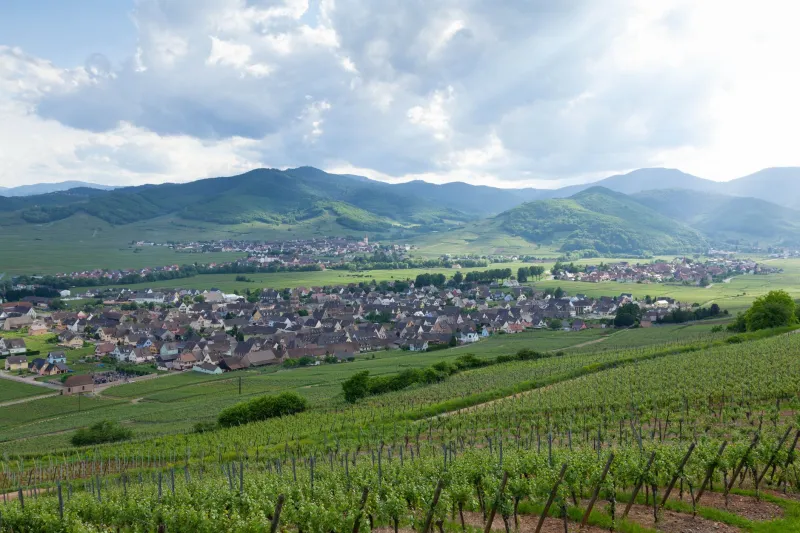
France is, at its core, a profoundly regional country. Its culinary identity was not assembled in the capital but in the provinces — in the farmhouses of Provence, the narrow streets of Lyon, the vine-covered hillsides of the Loire Valley, and the Germanic-inflected dining rooms of Alsace. Each of these regions developed its own dining customs, its own rhythms of eating, and its own relationship between the table and the landscape that produced the food on it. Most of these traditions have never made it to Paris in any meaningful form, let alone to the United States.
For the American diner who considers themselves a serious student of French culture, this represents an extraordinary opportunity — not just to travel differently, but to understand what French dining actually is beneath its most famous surface.
Lyon: The Capital of Serious Eating
No conversation about authentic French regional dining can begin anywhere other than Lyon. The city occupies a singular position in French culinary culture: it is widely regarded by the French themselves — not just by food writers — as the country's most important gastronomic city. This is a distinction Lyon has earned through centuries of serious, unpretentious cooking.
The defining institution of Lyonnais dining is the bouchon — a type of restaurant that has no real equivalent elsewhere in France and certainly none in the United States. Bouchons are small, often family-run establishments serving traditional Lyonnais dishes in a setting of deliberate informality. Red-and-white checked tablecloths, communal tables, handwritten menus on chalkboards. The food is emphatically not refined: tablier de sapeur (breaded and fried tripe), quenelles de brochet (pike dumplings in cream sauce), saucisson chaud (warm sausage with lentils), and the extraordinary salade lyonnaise — frisée, lardons, and a poached egg in a warm mustard vinaigrette.
What distinguishes the bouchon experience is not just the food but the pace and the social texture. Lunch at a bouchon is an event that occupies the better part of two hours. Carafes of Beaujolais arrive without ceremony. The patron moves between tables with the ease of someone hosting friends rather than serving customers. It is a dining culture built on familiarity and pleasure rather than formality — and it is largely invisible to the American imagination of French food.
Alsace: Where France and Germany Set the Table Together
Alsace occupies a unique position in French cultural geography. Having passed between French and German sovereignty multiple times over the past two centuries, it has developed a culinary identity that is recognizably French in its precision and commitment to quality but distinctly its own in flavor and form.
The Alsatian dining institution that most deserves wider American attention is the winstub — literally a "wine room." These intimate establishments, typically housed in half-timbered buildings in cities like Strasbourg and Colmar, serve regional food alongside the wines of Alsace in an atmosphere of warmth and genuine hospitality. The food is hearty in a way that French cuisine is not generally imagined to be: choucroute garnie (sauerkraut with various pork preparations), baeckeoffe (a slow-cooked casserole of meat and vegetables sealed with bread dough), flammekueche (a thin-crusted tart of crème fraîche, onions, and lardons that predates the pizza by centuries).
The wine culture of Alsace is equally distinctive. Where most French wine regions produce predominantly red, Alsace is defined by its whites — Riesling, Gewürztraminer, Pinot Gris — served in distinctive tall green-stemmed glasses. The pairing of these aromatic, often off-dry wines with the region's rich, pork-forward cuisine is one of the great underappreciated harmonies in the world of food and wine.
Provence: The Table as an Extension of the Landscape
Provençal dining culture operates according to principles that are, in some ways, the inverse of Lyonnais or Alsatian cooking. Where Lyon prizes richness and Alsace embraces substance, Provence celebrates restraint — not the restraint of scarcity, but the restraint of a cuisine that trusts its ingredients completely.
The defining ritual of Provençal dining is the grand aïoli — a communal meal built around salt cod, seasonal vegetables, and the region's defining condiment: aïoli, the garlic-laden emulsion that is to Provence what butter is to Normandy. The grand aïoli is not a restaurant dish in the conventional sense. It is a social event, traditionally served on Fridays and at festivals, eaten at long tables in gardens or village squares. The experience of it — the abundance of the spread, the communal nature of the service, the absolute centrality of the aïoli — is something that has never been successfully replicated outside its native context.
Also essential to Provençal dining culture is the tapenade table — the tradition of beginning a meal with small dishes of olive-based preparations, anchovies, and local cheeses that allow conversation to establish itself before the meal properly begins. This is the apéritif culture of southern France, slower and more food-forward than its Parisian counterpart.
The Loire Valley: Where Wine Defines the Meal
The Loire Valley is France's longest river region and its most diverse wine-producing area — a fact that shapes dining culture throughout the valley in ways that visitors rarely anticipate. Here, the relationship between wine and food is perhaps more intimate than anywhere else in France, because the variety of wines produced along the Loire's length means that almost every dish has a local pairing of genuine distinction.
The dining tradition most specific to the Loire is the cave repas — a meal served in one of the region's many troglodyte caves, carved directly into the tufa stone that defines the valley's geology. These cave restaurants, particularly concentrated around Saumur and Chinon, maintain a consistent cool temperature year-round and serve food that reflects the valley's agricultural abundance: rillettes (slow-cooked pork spread), tarte Tatin (which originated in the Loire region, not Paris), beurre blanc (the region's signature butter sauce, born in the Loire's fishing culture), and freshwater fish from the river itself.
The atmosphere of a cave repas is unlike any other dining experience in France. The stone walls, the candlelight, the wine poured from bottles that may have been stored in that same cave for years — it is a form of dining that feels genuinely ancient in the best possible sense.
Bringing the Provinces to the American Table
These regional traditions share a quality that distinguishes them from the French dining culture most Americans know: they are rooted in place in a way that resists easy export. The grand aïoli of Provence requires the olive oil of Provence. The bouchon experience of Lyon is inseparable from the city's particular social culture. The cave repas of the Loire gains meaning from its geological context.
And yet the principles that animate these traditions are entirely portable. The commitment to local ingredients, the unhurried pace, the centrality of wine to the meal, the understanding that dining is a communal act rather than a transactional one — these are values that can be practiced at any table, in any city. At Anisette Brasserie, they inform everything we do. France's greatness at the table was never confined to Paris. The provinces have always known this. It is time the rest of the world caught up.