Tuesday Deserves Better: The Argument for Cooking Brasserie Food on a Weeknight
Somewhere along the way, American home cooks adopted an unspoken rationing system. The good pan comes out on Saturday. The bottle worth opening waits for company. The dish that requires actual attention is deferred to a weekend when, in theory, there will be time.
The French never signed this agreement. Walk past a Parisian apartment window on a Tuesday evening and there is a reasonable chance someone inside is searing a steak, frying potatoes, and pouring a glass of something modest and correct. Not because it is a celebration. Because it is dinner, and dinner is worth doing properly.
This is the brasserie's quiet gift to the home cook: a repertoire built on the radical idea that drama and effort are not the same thing.
The Brasserie Secret: Few Moves, Executed Well
The classic brasserie canon is often mistaken for restaurant food—impressive, technique-heavy, best left to professionals. Look closer and the opposite is true. The dishes that made these institutions famous are, almost without exception, built from short ingredient lists and a small number of repeatable techniques. What they demand is not labor but conviction: proper heat, proper seasoning, and the confidence to stop when the dish is done.
Three of them belong in every American weeknight rotation.
Steak Frites, in Twenty Minutes Flat
Nothing on a bistro menu carries more theater per minute of work. The technique is a single one—searing—executed without hesitation.
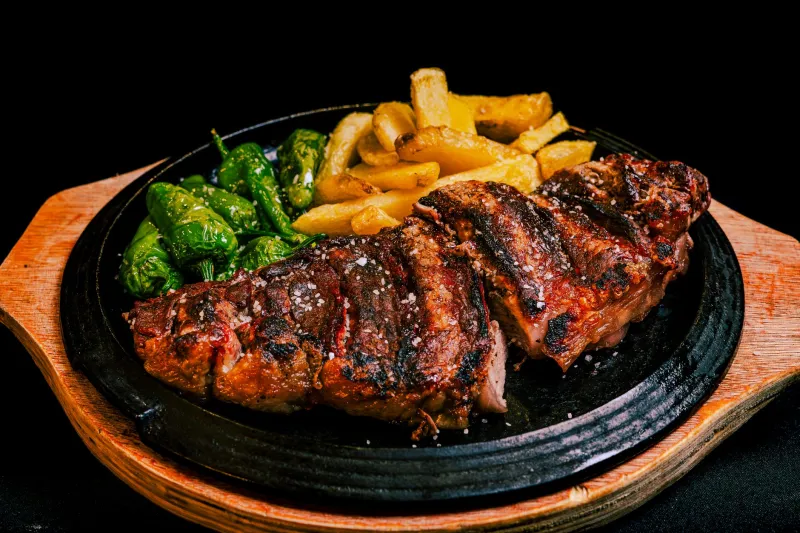
Take a strip steak or small ribeye, dry it thoroughly, and salt it generously ten minutes before cooking. Get a heavy skillet ripping hot, add a spoonful of neutral oil, and sear the steak undisturbed, two to three minutes per side, finishing with butter, a crushed garlic clove, and thyme spooned over repeatedly. Rest it while you fry the frites—or, on a genuine weeknight, toss quartered russets in oil and roast at high heat until crisp at the edges. A handful of watercress, a spoonful of mustard on the side, and the plate is complete.
Total active time: about twenty minutes. Perceived effort: considerable. This asymmetry is the entire brasserie proposition.
Duck Confit, Without the Confit
Traditional confit involves curing duck legs in salt and submerging them in fat for hours. It is wonderful, and it is optional. The weeknight version borrows the destination while skipping the journey.
Season duck legs (widely available at American supermarkets) with salt, pepper, and thyme, then nestle them skin-side up in a baking dish with halved shallots, a few garlic cloves, and a splash of stock. Cover tightly and roast low—around 325 degrees—for an hour and a half, then uncover and raise the heat to crisp the skin. The meat will slide off the bone; the skin will shatter like pastry.
Serve over lentils dressed with a little mustard and shallot, and you have produced the most impressive-seeming plate in your repertoire on a night when you did little more than turn on the oven.
Tarte Tatin, the Weeknight Showstopper
No dish better illustrates the gap between appearance and difficulty. Tarte tatin—apples caramelized in butter and sugar beneath a blanket of pastry, then flipped dramatically at the table—looks like patisserie. It is, in truth, a one-skillet dessert of roughly four ingredients.
Melt half a stick of butter in an oven-safe skillet, add half a cup of sugar, and cook into a pale caramel. Arrange peeled, halved apples snugly over the top, pack in more halves to fill the gaps, and cook gently for twenty minutes. Lay a sheet of store-bought puff pastry over the apples, tuck the edges down, and bake until golden, about twenty-five minutes more. Rest for ten minutes—no longer, or the caramel will grip the pan—then invert onto a plate with confidence. Serve with cream, crème fraîche, or vanilla ice cream.
The flip is the moment guests remember. The effort is the part they will never suspect.
Retiring the Weekend Exception
The deeper argument here is not about duck legs. It is about a habit of mind: the American tendency to treat ordinary evenings as beneath ceremony. The French weeknight table suggests another posture—that a Tuesday is a perfectly respectable day for a proper meal, and that a proper meal requires no occasion beyond hunger and a half hour of attention.
Start with one. Pick a Tuesday, make the steak, open the modest bottle you were saving. The weekend will still be there. It simply will no longer have a monopoly on eating well.